|
|
|
September 27, 2008 Magical Thinking (or: what happens when you talk to rivers) 
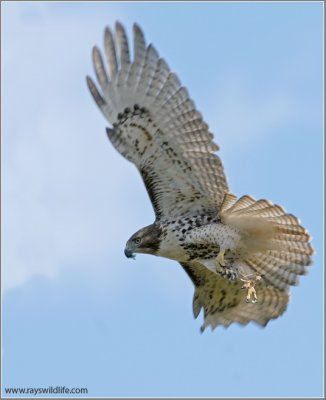
I'm not sure what to make of this story. I'm not sure whether it even is a story or if it is only a series of unrelated events. Human beings like to make stories about everything: I forgot my umbrella, so it rained; I just got back inside and put the shovel away, so the snowplow came by; I have a really important interview tomorrow, so tonight my neighbours will have a party that keeps me up until two. It's called magical thinking and we all do it even when we know we're being ridiculous. Still. This may be a series of unrelated events, or it might be a story. I'll write the events out in chronological order and let you decide if and how you want to put the causal chain in. One. Last week, my Thursday class on writing for periodicals, we were given an assignment to write a short 300-word piece on a location of our choosing. We must rely both on written research and at least one interview, due this coming Thursday in rough draft. She gave us some short instructions on how to go about getting and conducting interviews. For two days I dithered. The farm, or the park on the Don? The park on the Don, or the farm? Both are meaningful to me. I'd enjoy learning more about both of them. I'd have no trouble getting an interview at the farm but written research might be tricky. On the other hand, there's an entire annotated bibliography online on material about the Don River, though I wasn't sure who I would interview. So many people were involved there that I had to be able to contact someone--I went with the Don. I printed reams of reports off of the City's and the Conservation Authority's internet sites, and wrote down lists of names that came up and their contact information. Two. Friday night I could not sleep. The thought of living off of savings panicked me. It does that sometimes. Despite my Scottish last name, my actual Scottish heritage is in the minority; I am more English and Norwegian than Scottish. Still, in terms of my fiscal personality, and I am Scots through and through. I save money. I keep budgeting spreadsheets and track numbers in my head and haven't carried a credit card balance in over ten years. Even if I had the money for it, I can't imagine buying clothes I don't need or a $300 sweater. In an era where it is common, and perhaps even expected, for people to live off of debt, it sends me into a panic to think even of spending my savings, let alone owing anyone money for anything. So Friday, I could not sleep. I thought about spending my savings. I thought about unexpected expenses that might send me into debt. I thought about graduating with no money and having no cushion for a job search. I spent an hour with the spreadsheet reassuring myself once again that any job in the next two years bringing in any money whatsoever will allow me to graduate with a savings balance, however meagre, and no debt, so long as I am careful. Sometime around 3 I fell asleep. Three. I started the week with a major sleep debt. Sunday night I sent off a few emails asking for interviews. By Tuesday I had nothing still. I left a few voicemails. Four. Wednesday was my day with Frances. I have no classes Wednesday, so I drop Frances off "right on time" at Ms. S.'s class, and pick her up when it ends. She loves this. She asks me every day if I will be able to drop her off "right on time" and pick her up "without going to daycare." When she sees me outside the window waiting for her after her s/k class, she jumps up and down and waves her arms and starts babbling at me through the glass. This is how happy she is to know that I will be picking her up and taking her home and she won't have to go to daycare that day. She ran to get her backpack and we walked home together. It was a beautiful day but she didn't want to go outside. She wanted to play with me inside. I was terrible company; still exhausted from Friday night and worried now about the interview and the assignment. So exhausted that I was fighting sleep on the sofa while she talked to me, and I think for about fifteen minutes I actually did sleep. I was too tired to do housework and too distracted to do homework. Around five o'clock one of the people I had left messages for called me back and told me that he had no experience with the park in question, but the next evening there was going to be a council meeting at which someone with a great deal of experience there would be present. All this while, in the background, Frances asked me "Who's that, Mummy? Is that your friend? Is that Greg? Is it Siobhan? What are they asking you? Is it my Daddy?" "Shh," I mouthed, pointing at the phone, trying to pay attention to the person on the other end. Five. Thursday morning I had still not caught up on my sleep. I had to get Frances to school at nine and then run and then get to school myself for 11:30 and then do a few errands and get home and do some homework and get Frances's bag packed for the weekend with Erik and then on my only night off that week I would have to go to a council meeting for a few hours so I could get an interview for a school assignment. I would never catch up on my sleep again, that was certain. I was grumpy. To put it kindly. I furiously scolded myself for it; is it Frances's fault that you're tired and all of her requests this morning feeling like the one-more-thing you just can't deal with right now? No. Do you have to sound like such a bitch? Maybe you'll get an hour to yourself this afternoon, maybe you can have a nap then. Where are her shoes? Her shoes her shoes her shoes. Frances, go find your shoes, put them in your bag. Fine, I'll find your shoes for you, don't I have unlimited time and energy? Come on, let's go, we're going to be late again. I came back. I collapsed on the couch for thirty minutes, drawing up lists of what I had to do that day, packing my bag for school, listlessly checking Facebook. I put on my running shorts and t-shirt and got my iPod and sunglasses and set off down the main street for the park. It was a beautiful day, but it meant little to me. At times I found myself actually crying as I ran, for being so tired and having my time so packed that if I were to accept such an excuse as exhaustion for not running then I would never run. I got to the boulders just downstream from the little waterfall, paced a little on the footpath running beside the river, looking to see if there were still any baby garter snakes (no, there were not). I checked the time on my iPod; 10:30. Shit shit shit, I had fifteen minutes before I was supposed to leave for class, I wouldn't even be home by then. I would be late again, and I had had no time to just sit there and be and enjoy my spot by the river. At that moment everything seemed utterly hopeless. I would not be able to get my homework or assignments done. I would not be able to spend the time with Frances that I wanted to. I would not be able to find work in my new field or, after having taken time off, my old one. I was a fool who had reached too far for too much and would be punished for it. I would be exhausted forever, the time before me stretching off into a dreary distance that would continue unabated until Frances had moved out, and I would just move through each day as I had the day before, never being who or what I wanted to be, never being the mother I wanted to be or doing the work I wanted to do or being even a generally competent human being. I was failing as a single mother, and all I could do was slog through and wait for the day when I wasn't a mother anymore. The day I stopped failing would be the day I no longer had the chance to get it right. What I would really like is a full day off and a hundred thousand dollars, I thought. Enough for the next two years and a small cushion when it's done. I knew it was silly as soon as I'd thought it, in part because there's no such thing as security and in part because I know people who have hundreds of thousands of dollars in the bank and are still petrified that the moment they lapse, the moment they step off the work treadmill, they'll end up homeless. And a full day off would come sooner or later. I just needed to hang on until it did--if only I could hang on to my patience as well and not unwittingly take my frustration and tiredness out on Frances, who doesn't deserve it. The biggest downside of being a perfectionist is that you are always, inevitably, failing. What am I here for, anyway? I thought. What's the point of all this? Just to slog through and be miserable and failing all the time until it's too late and it doesn't matter anymore? That can't be right. How can that be right? Why can't I just be a normal person who's satisfied with a regular, well-paying job and a nice house and a lot of television? Why do I have to go making everything so complicated? I might have mentioned my green kin before, or that to me the river is practically a person, or that I like critters and speak to animals. So. I quietly said to the river, if only you could tell me that I'm doing the right thing, that I'm on the right path. If only you could give me a sign. Six. I turned around and saw a hawk fly to a maple tree across the path. It clenched a branch far above my head and stared. Creamy belly, dark back, vicious hooked beak. That's a hawk, I thought. Not a sign. Still, I stood and stared at it for a few moments, more runners passing me with curious and faintly concerned looks on their faces, before I turned to home and ran back. Seven. I asked the teacher after class if in her opinion it was worth it to take an entire evening and sit through a few hours of council meeting for a chance at an interview. Yes, she said. Absolutely. I could take notes during the meeting and ask a few questions on my way out the door afterwards and I'd be done and have some good material. Of course I was asking her for permission not to, to tell me that it was too much effort for a small assignment and I should try to get something easier. I was asking for permission to take the night off. I didn't get it, so I went to the council meeting. And thought with dread about sitting in a roomful of strangers, introducing myself to them and asking them a lot of questions they didn't have time to answer. Eight. The person I'd spoken to on the phone had emailed me a copy of the agenda, which had included a request to RSVP the meeting coordinator, so I did. A few hours later, after Erik had picked up Frances, I set off by subway and arrived about fifteen minutes before the meeting was to begin. A table full of vegetarian food had been set out by the door; my stomach growled. "Are you M?" I asked a woman standing near the table (M being the meeting coordinator). "No," she said. "Are you Andrea? AF forwarded your email to me, I have it on my desk to contact you tomorrow. We were hoping we could publish whatever you're writing in our next newsletter. Of course we'd give you credit." "Oh, of course," I said; thinking: clip! "I can't answer much about that park in particular," she went on, "but the person you really want to talk to is sitting over there." That was the person I'd been told would be at the meeting. I sat towards the back and took notes while eating pasta and cornbread, and afterwards she introduced us and we chatted about plans for the park and its history and his involvement there, and it came out that he works for a Big Canadian Media Conglomerate that owns a dozen or more major Canadian magazines in the Toronto area, during which the magical word "internship" made an appearance or two, which I threatened to make good on next summer. He then invited me to a tree planting in the park for Saturday and gave me a ride home. I managed to get through an entire undergrad education in environmental studies and a ten-year career in the environmental field without ever having attended more than three tree plantings. But I smiled and promised to show up if I could arrange childcare. Nine. All day Saturday was a fine drizzly light rain, sometimes strengthening; and I was outside planting choke cherries, dogwoods and elders on the banks of the Don. It felt like giving thanks. Although right now it mostly feels like stiff shoulders. ~~~~~ Is it a story, or a series of unrelated events? Was it a sign, or a hawk? Does it matter? Posted by Andrea at 8:27 PM | Comments (8) August 11, 2008 The Green Family: The Marathon
I meant to write and post this over a month ago; but then, well, I couldn't quite figure out how to end this. I know what a marathon is in environmental-metaphor speak, but it fell flat. Here goes: A marathon is when it stops being someone else's thing and becomes your thing. When you find a cause or an issue that you care passionately about and work on it not because someone else told you you should, and not because someone else told you what to do, but because it's yours. I am not there myself and I don't know if I ever will be. The closest I come to it is in my writing here, hoping that by sharing the immense love I have for my own environment, that maybe you will love yours a little bit more too. (The ultra-marathoners, for those of you who are wondering, which I know is all of you because doesn't everyone find this fascinating?, are the people like David Suzuki who take their thing and make it everyone else's thing too--the leaders and organizers.) But, enh, who cares? The number of environmental marathoners in the world is quite slight, and we don't all need to be at that level. We just need our lifestyles, politics and activism to be in reasonably good shape. Here's a recap of the Green Family How To Train for an Environmental Marathon Guide: 1. The Introduction, wherein I introduce the ecological footpring calculator and break down the basics of what level of environmental action corresponds to what level of physical effort. 2. The Slow Walk, some very easy and basic lifestyle changes to knock a few hectares off of your footprint. 3. Walk Fast, being slightly more challenging lifestyle actions. 4. Walk/Run, more challenging lifestyle actions plus a little self-education on local environmental issues and resources. 5. Run a 5k, the last of the lifestyle changes plus some online resources on environmental news for your edification. 6. Run a 10k by reading a book. A whole book on an environmental issue. 7. Run a Half-Marathon: activism for beginners! 8. Rest and Regroup, including environmentally-themed fun for the whole family. 9. Run 20 Miles: more challenging and time-consuming forms of environmental activism. 10. The Marathon: Ta-da! You're here. I'm not going to quiz you on what you personally have taken from it or done (though if you'd like to tell me that would be great). But I would like to keep this going as an occasional series on environmental lifestyle changes, fun stuff, and activism for families. Activities in the run/walk to rest-and-regroup stages, maybe once per month or so. (Unless any of you would like to make strong pleas either for more or less frequency.) If any of you would like to participate, that would be fun too (whether by contributing ideas, posts here, posts on your own blog that I'd link to, or whatever you can think of). Let me know in the comments or by email (andrea AT andreamcdowell DOT com). So long as it has nothing to do with either boycotts or stuff you can buy, which not only rubs me the wrong way but is more than adequately covered in far more popular venues than mine. Posted by Andrea at 8:05 AM | Comments (5) August 6, 2008 Wee Treehugger
We were in the mall and I was trying to find a way to convince Frances to walk. As is the case with many children, she can run, jump, skip, dance and turn cartwheels all afternoon, but can scarcely walk for fifteen minutes before declaring herself exhausted and asking for a lift. I needed to get groceries and pick up some books on hold at the library and had foolishly forgotten to bring my cart, so was in the position of lugging several heavy hardcovers to the grocery store, and Frances was asking me to carry her. "Oh sweetie, look at everything I'm carrying! I can't pick you up," I said. Just then she stopped. "Mummy, is this a real tree?" she asked me. "Yes, it is." "But it's inside!" "I know. Isn't that silly?" She nodded. "I like this tree. Can I touch it?" I nodded, and she petted it, then wrapped her arms around it and gave it a hug, resting her cheek against the bark with her eyes closed. Onlookers grinned at her. "Oh Mummy, there's another one!" She ran to the next, and hugged it too. "How many do you think we can find between here and the grocery store?" I asked her. "Can you count them?" Off she ran, all requests to be carried forgotten in the excitement of tree-counting (there were eleven, we discovered), and this ploy worked all the way through all the errands right until we left the mall, at which point she promptly asked me to carry her again. Still. Success! I congratulated myself on being such a creative, thoughtful mother, who came up with something educational and positive that would get her child moving on her own steam and at great speed through all the errands she had to do. Every time since, when we've gone back, she insists on stopping, counting, and hugging every tree. It is very sweet. And by and large, it slows us down. "Mummy, it's another tree!" She stops, pets it, gives it a lingering hug. Onlookers grin. "So it is," I say, looking at Marvin II's clock. "Come on sweetie, it's lunch time. Let's go home." "Oh, there's another one!" Off she runs. I sigh. Posted by Andrea at 8:39 AM | Comments (5) August 5, 2008 worth every mosquito bite
If you've been reading along for even the past six months or so--and certainly if you've been reading for longer--then you will already know that one of my favourite places on earth is my grandparents' cottage. It was a shack. It was a small, dirty, mouse-ridden shack with no running water, no toilet, no shower, built at least in the 1930s when a family lived there--with no heat, no insulation, no paved roads. I can't imagine it. There's nothing to do at the cottage except stick your feet in the creek and watch pinecones go over the falls. I loved it. To this day I can recall how it felt to put my hands or feet on the sandy, dry soil, all covered with pine needles and cones, and watch the ants scuttling over me. How the rocks nearest the shore were slimy and the water was always cold and you couldn't go out very far because the current was strong--it's a big creek--and you didn't want to get swept over the falls yourself. Huh. I can't even begin to say anything about it without running off at the mouth. I'll start again: If you've been reading along for even the past six months or so, you will already know that one of my favourite places on earth is my grandparents' cottage. Even if I haven't been there in almost twenty years. -thumb-250x166.jpg) So I was presented with something of a dilemma when Greg invited me to go up to his parents' cottage for the August long weekend to meet his parents and sister. Of course, phrasing it as a "dilemma" makes it seem as if there was ever any doubt of what I would do: the cottage is just down the street from my grandparents's. The cottage won. Any potential awkwardness would just have to be suffered through for the opportunity to see forests and trees and bugs and maybe even a few critters. (You might have noticed that I really like forests and trees and, yes, bugs and critters.)
So I was presented with something of a dilemma when Greg invited me to go up to his parents' cottage for the August long weekend to meet his parents and sister. Of course, phrasing it as a "dilemma" makes it seem as if there was ever any doubt of what I would do: the cottage is just down the street from my grandparents's. The cottage won. Any potential awkwardness would just have to be suffered through for the opportunity to see forests and trees and bugs and maybe even a few critters. (You might have noticed that I really like forests and trees and, yes, bugs and critters.)
Although as it turns out, there was no awkwardness. It was a lovely weekend all around. We played Settlers of Catan and Greg's superhero role-playing game (though I was more of an observer there, I did get to be the giant monster lobster, and I think I managed to clack and scuttle with the best of them) and brainstormed clues for a scavenger hunt and ate, and that, plus tromping around in the bush getting eaten alive by mosquitoes, pretty well sums up the weekend. The forest just behind the cottage is wet enough (either this year in particular or just in general) to support a wide variety of funky mushrooms and I dragged Greg through all of it getting shots of yellow translucent mushrooms like jellyfish and white mushrooms with red caps like elf homes in cartoons and irridescent mushrooms like the insides of seashells, and the local garter snake came out to say hello and asked me to take its picture too. I won't post them all today at least in part because I couldn't possibly, they wouldn't fit, but I'm sure you'll see them all eventually. 2-thumb-250x165.jpg) The cottage is on a fair-sized lake with a number of small-to-middling islands scattered through it (note: this describes much of Ontario thirty minutes north of Toronto and up), one of which is named the Peanut for its dimunitive size. Greg and I took the paddle boat out there and tromped around (as much as you can tromp over an island smaller than my living room) and I took photos of all the itty-bitty blueberry plants and trees that had somehow managed to grow on an island that is entirely an outcropping of clear and rose quartz (though it looks like granite, having been covered by fungi and mosses and lichens).
The cottage is on a fair-sized lake with a number of small-to-middling islands scattered through it (note: this describes much of Ontario thirty minutes north of Toronto and up), one of which is named the Peanut for its dimunitive size. Greg and I took the paddle boat out there and tromped around (as much as you can tromp over an island smaller than my living room) and I took photos of all the itty-bitty blueberry plants and trees that had somehow managed to grow on an island that is entirely an outcropping of clear and rose quartz (though it looks like granite, having been covered by fungi and mosses and lichens).
That's one of the things I love about the region: the bedrock is so close to the surface everywhere that it juts out, the bones of the earth right there to be touched, and still life thrives all over it. Everywhere you look is a green tangle of leaves; the tree seeds find cracks in the rock and somehow there's enough there to grow on. Life is tough. Posted by Andrea at 8:44 AM | Comments (4) August 1, 2008 Eyes to See With
I don't know about you, but when I stay home from work with a bad mirgraine--the kind that makes me nauseous and dizzy--go to bed, wake up feeling a bit better with the headache biding its time in the background, I go for a nice long bikeride with my camera. At least, if the weather is nice and I expect it might be my last chance for a while and I haven't been able to do so because of childcare responsibilities and weather, I do. I put my camera in my backpack along with my journal and a pen and the iPod, and zip down beside the Don, drinking in the sight of summer-green leaves against a summer-blue sky and the gurgling of the river at my left, here narrow and brown, there wide and grey-white. I try not to, but as I ride I categorize what I'm seeing: goldenrod, tansies, snapdragons, orchids, violets, sunflowers (someone's birdseed distribution error, I imagine), deer, Wait. Deer? I brake the bike hard, get my camera out of the bag, turn it on and double back on foot. Yes, deer. -thumb-200x133.jpg)
A doe and a fawn, staring at me. I stare back. "Hello," I say. They don't reply but they haven't run away yet. (click) "Aren't you lovely," I say. "Thank you for staying." (click) A girl walking by stops to see what I am taking pictures of, and grins widely. Eventually the doe and fawn trot away, and I pack up my camera. The girl and I smile at each other, pleased to have shared some magic on an ordinary Thursday afternoon. -thumb-200x125.jpg)
That bikeride was packed full of sightings. Monarchs posing patiently for me, dragonflies skimming the river and stopping to rest on a nearby leaf, bumblebees half the size of my thumb soaking pollen from tansies, something like a white grasshopper flaunting itself on a dark green leaf by a footpath in the woods. And--two more deer sightings. One of them another doe-and-fawn pair. The doe and fawn were well-hidden the second time, I grant you; so I can understand not seeing them, and forgive the cyclists, joggers and walkers who went by staring at me curiously. (You might have to click on the picture for the full-size version to find them yourself.) What could she be taking pictures of? Who could she be talking to? But the last deer was standing not a metre from the paved bikepath, calmly and loudly munching on leaves. I stopped and snapped away. "Look at you." (click) "Aren't you beautiful." (click) "Thank you for staying still and letting me take your picture." (click) "Can you believe that no one else can see you?" (click) -thumb-200x125.jpg)
Other members of my species just went right on by, not sparing a glance for a the grown deer standing right in front of them, looking only at me with worried frown on their foreheads. But--look. There's a deer in this picture, isn't there? Too busy on their way to the tennis courts, I guess; too caught up in whatever is going on in their heads, too worried, too distracted. But whatever the reason, it shocked me. Look! Nature is right there. You just have to keep your eyes open. Squint, maybe. Pay attention. Posted by Andrea at 8:58 AM | Comments (12) June 9, 2008 The Green Family: Run 20 Miles
Really it's pretty amazing if any of you are even contemplating this step. Twenty miles is a long, long run. It takes a lot of work and dedication. If you have come this far, that is impressive. There's nothing wrong with resting on your laurels at this point and continuing the lifestyle changes, education, and occasional bit of activism that you've undertaken already. But let's say you wanted to go farther. Let's stay you're still working up for that marathon. What else can you do? 1. Campaign. If there was a candidate you learned about that said everything you believe in and you want them to get into office, sign on. Campaigns can always use volunteers. 2. Take on a stronger role in the environmental group you learned of before. 3. Instead of writing a letter to the editor, try writing an op-ed. 4. When you write a letter to a company, try collecting signatures before you mail it in. 5. Become involved in local or municipal government committees. 6. If you are involved in any school councils or neighbourhood groups, try pushing for the inclusion of more environmental activities (anything from using reusable cups at meetings to planting a naturalized garden on the school grounds. In Canada at least there is an established environmental group (Evergreen) with a program that tries to accomplish this; it never hurts to ask for help). Basically, this month you are taking your issues out of the closet. It's not private anymore, it's public; and it's now both personal and political. Posted by Andrea at 12:04 PM | Comments (2) May 8, 2008 The Green Family: Rest and Regroup
As any actual runner will tell you, after a significant race you always take some time off to recover. Last month took some effort, and might have been new for you. So this month, let's have some (environmentally-minded) fun. Let's get to know where we are a little better. It's spring now, or will be soon. How about the following? Plan a garden with native or heritage plants. Look into local sources for gardening supplies that are organic and low-impact (compost, mulches, containers, etc.). Or plan a butterfly garden. Get a field guide for local plants, wildflowers, birds, small animals, or mushrooms in your area. Find somewhere you can go for a walk or a hike to track them down (if not now, if it's still too cold and wet, then when the weather cooperates). Look through a book like this one* to get some ideas of fun environmental activities to do with kids. Look through a book like ReadyMade to get ideas for fun things to make out of things you already have. (Reuse crafts can go beyond the egg-carton-caterpillar and the toilet-paper-tube-birdfeeder.) Find a community garden near you. Get a book about astronomy out of the library and learn to identify a few constellations. Pick a native plant species to follow through its growth cycle. If you are planning on doing some landscaping this year, think about edible forest gardens. Learn about a few edible wild plants in your area (though unless you are very confident in your identification skills I would not advocate eating them. If you want to be able to do this, there may be a course in your area). ~~~~~ * I have not read this particular book, but I have read similar other books like Sharing Nature with Children and Hands-On Nature, all of which have good stuff in them and are good introductions if you are absolutely clueless about what to do in the outdoors except walk, run, bike, camp and picnic. Some of them are fairly detailed and will give you background information on a particular natural topic so that you can structure a lesson and activity around learning something, others are more recreational. Pick whatever suits you and your progeny. Posted by Andrea at 10:02 AM | Comments (0) April 22, 2008 Happy Earth Day
You're not going to get much else out of me today, because I plan to be outside (and not on the computer) as much as possible. At least around here, it's a beautiful day. The sun is shining, it's warm, ten degrees above seasonal for April. The first leaves are coming out and the first So I think today Frances and I will eat our dinner under the trees out back. Frances will watch the squirrels running around and try to make friends with them. I'll read a book, and make a plan for something we can do outdoors that is more earthy and less living-roomish. Then she'll play with C. They'll plan a carnival or a party of some sort, share their toys, play with one of C's budgies. This past weekend , when the warmer-than-it-should-be weather started, I rode my bike down to the Don. The last piles of dirty snow had finally melted and the entire trail was accessible again. There were families out walking dogs, couples jogging, a few other people on bikes; despite the lack of leaves on the trees it was just like last summer. The bike made the wooden bridges rumble like tractors, and sped down the hills fast enough to make me worry about spinning out in puddles of fine gravel. There were no trilliums, sadly, but other green things were poking themselves up through the leaf litter. Whenever I could I watched the river--now placid, now running, now sluggish, now tumbling over boulders and logs down a slight incline, now thrown up by stones in a shallow bed into a white froth. On the last bridge before exiting the park I stopped and got off my bike just to watch the water running off into the distance. The trees were still bare, the banks barren. The sun had started setting and the twilight was deep. That something in me plugged in to the something outside, like stepping in to an old cathedral where large and important events once took place, or like catching a glimpse of face in a crowd belonging to someone you thought had long since died. Or maybe like seeing something holy, a reflection of that bit of god that lives in everything suddenly on the surface. "My god," I said out loud. "I missed you." I don't think I can put into words how much she is like a real person to me. Posted by Andrea at 8:14 AM | Comments (4) April 16, 2008 Green
(This week Julie wants to know what the earth or environmentalism means to us.) I admit it: my environmentalism is not 100% altruistic. I can't say exactly what % it is altruistic, but at any rate it's not 100, and that's the important thing. Because the earth is a bit of a close personal friend of mine, and I would so like it if people would stop abusing her. What I love about her that you (or I, at any rate) don't get from anyone else is her absolute commitment to egalitarianism. When I ride my bike down to the park and sit on the river's banks, on large boulders that are sometimes in the sun and sometimes in the shade; when, if the weather is warm, I work myself right down to the water's edge to dip my fingers in; the river does not say to itself, "This one yelled at her kid this morning. Let's be extra cold." The sun doesn't pull itself behind a cloud because I don't dye my greys. The trees don't shrivel up and turn brown because my car is getting old and doesn't like starting in winter anymore. Nothing about who I am matters when I'm sitting there. The river will dance over the stones the same for anyone who comes along behind me, whether supermodel or felon, geriatric or child, executive or homeless--they get the same rushing, the same backspray, the same wobble on the third boulder behind the bench. A rabbit or coyote or chipmunk or even a mushroom will see the same trees (if you ignore the mushroom's total lack of sense organs). Similarly, when I was young and skinny and weird, and I laid on the ground of a pine needle forest, I did not get extra jabs from the fallen needles because I was such a dork. If a wealthy man and I were to camp in the same patch of open ground, the planet would not leave a pebble right underneath my right hip while apologizing profusely for the inconvenience to the man and promising to rectify it right away; nor would it invent lumps and roots for a poor kid wearing thick glasses because his parents can't afford contacts. A breeze won't look up my skirt and then follow me home, begging for my phone number. It is possibly the only experience most of us have with such indifference: the rain doesn't care what your skin colour is or if your parents never graduated from highschool or that you're a boy who likes to wear skirts. Maples go scarlet for anyone, whether people who look like them regularly grace the covers of magazines or not. Brad Pitt and Scarlet Johannsen don't get a better snowstorm than the rest of us. I know as well as you do that our race and class and sex and age and size and ability and all the rest of it absolutely affects the kind of access we get to the planet and the share of her resources we can claim before we are labelled thieves, radicals or terrorists and locked away. But that's a people thing. Once we get to the same spot on the same day, you and I both get the same sun and the same birdsong and the same crocuses sticking their green fingers through the mud. You never get that from people. Maybe that's why it's so easy for me to relax in natural spaces. And maybe that's why it's so easy for me to believe that when the planet gets sick of us and decides to fry the lot of us, being a millionaire is not going to save you. It might get you a reprieve, but in the end an inhospitable planet is inhospitable in Ethiopia and Kansas and Belarus and Bel-Air. Most importantly for me, I think, is that one day when I'm old and possibly disabled and become invisible in that way that old women seem to, when the cashier's eyes slide automatically to the person standing behind me and people wait with an impatient grin on their face for me to hurry my ass through the door they're holding, and I'm taking my bag full of prescriptions home to sort them all into their slots in the day-of-the-week pillbox on my kitchen table, once I get outside and turn my face up to the sky, I get the same sun as the person beside me, no matter who they are. Posted by Andrea at 8:53 AM | Comments (9) April 7, 2008 The Green Family: Run a Half-Marathon
Big breath in, big breath out. Are you ready? It's time to be an activist. By now your lifestyle is as good as you can make it. You know something about your local environment. You know something about most big environmental issues, and a fair bit about at least one. You know who your representatives are. It's time to think about how you can start to put it all together. I know it's scary, especially if you have an image of a placard-wielder in your head, but there are lots of things you can do. Think of one issue that is important to you, and a suggested solution for it. No, you can't rebuild our cities or redesign our economy, but you can do something besides lifestyle changes. Here are some ideas: 1. Write a letter. Write a letter to the editor of your local newspaper. Write a letter to a politician, either your representative or the person in charge of the ministry or agency that affects that issue. Write a letter to the person in charge of public affairs for a company that is involved in something that troubles you. Write a letter to the person in charge of public affairs for a retail outlet that sells a product that troubles you. Remember to spell correctly and use good grammar. Get it proofread if you don't trust yourself. And don't yell or call anyone names; be polite and as positive as you can be. (Unless they are killing people.) Remember that actual paper letters have more of an impact than either form letters or emails (precisely because they are less convenient, they are taken more seriously); also, yes, your reply will be a really dumb form letter or some mumbo-jumbo that doesn't answer your concern at all. This doesn't mean that the person who read it isn't taking it seriously, it means that they have to give you the stock reply. That letter could still be the subject of a meeting or two, especially if it's part of a pattern or trend. Nice letters count too. If there's a business doing something really great, don't just give them your money, tell them why. "I'm so pleased to have found sweatshop-free affordable clothing for my kids!" or "I shop here because of the rainforest free lumber" or whatever--give them some positive reinforcement. Activism doesn't have to mean complaining all the time. 2. Look through the public notices section of your local newspaper. (You figured this out way back during the walk/run). Find a meeting about an issue or project that concerns you. Attend, or if you can't attend, use the alternative means of expressing your interest in participating and being kept informed. Sometimes this is as easy as being added to a mailing list. Then, when there's an opportunity for you to become involved, you'll know about it. 3. Volunteer with that environmental group you found so long ago. Call them up and ask them what kind of help they would like. 4. Participate in a tree-planting or other public environmental initiative. Even better, volunteer to be part of the group that follows up on public planting projects to keep them alive. 5. In some places, there are opportunities to do field-work monitoring of endangered species or other environmental issues. Often these are allied with local nature or environmental groups, or colleges or universities. 6. If you enjoyed that book you read, give it to a friend or family member. Yes, that counts. You've taken a step to make a private concern public and persuade someone else of your point of view, which is one of the main thrusts of environmental activism. 7. Be part of a community garden. 8. Talk to your child's school about greening the school grounds, improving recycling or composting, or adding more environmental aspects to the curriculum. Do a bit of research first so that you know how they can accomplish this without stretching meager budgets or asking overworked teachers to do even more than they already do. There are organizations out there that make such projects their major focus; you can get a lot of help. 9. If you live in an apartment building or condo, the same applies. 10. Politely harass local businesses about improving bicycle parking. Politely harass your employer for the same, if appropriate, and if it applies also changing and locker facilities for those who bike, run or walk to work. Other ideas can be left in the comments box. In my opinion, all activism means is that you are expanding the focus of change beyond your immediate family. You are trying to change minds and change practices (based on good information) outside your front door, make it a little bit easier for everyone to choose the greener option. Posted by Andrea at 9:01 AM | Comments (5) March 11, 2008 The Green Family: Run a 10k
Science journalism tends (like most journalism) to be sensationalist and not particularly deep. It's a limitation of the medium. My new favourite example is a news story I read a few months ago that said a study proves men and women like their kisses different, which just goes to show you that men are looking for sex sex sex and women just want a stable provider. If you're thinking, 'say what?', exactly. Looking deeper into the study in question found that yet again there was far more similarity than variability in how the two sexes answered the questions presented, which probably indicates that men and women are looking for mostly the same things, but that doesn't make for a good news story. It's the same thing with environmental journalism. Facts are often obscured in the pursuit of a good story. Environmental blogs, while generally run by scrupulous and well-informed people, have the compunction of brevity, which makes it difficult to get a good handle on any particular issue. So this month's assignment is to read a book. Any book on an environmental subject, so long as it's not a good-news book (and that's not because all good-news books are bad, but that there is a tendency of anti-environmental crusaders to publish books that claim to be good-news books and which really are thinly veiled screeds about how all environmentalists are idiots). You're free to just walk into a bookstore or library and pick something interesting, but here are some titles I can recommend over the last year or two: Field Notes From a Catastrophe Bonus points to anyone who reads, or at least skims, the IPCC report on Climate Change. If enough of you do, maybe we can have a discussion about what it actually says, as opposed to what the newspapers tend to claim that it says. Posted by Andrea at 9:00 AM | Comments (5) February 12, 2008 Andrea + Books = True Love Forever, Also No Money (Or: the UnShopping Midway Update)
January I did ok. In January, this is what I bought: A birthday present for one of Frances's friends. Still, for a month of no shopping, that's not bad. First weekend of February, do you know what happened? I bought four books. Yes, four. One is Bub and Pie's fault. I saw a comment she left on another blog about The Highly Sensitive Person and decided to read it. There were no copies available in the library system (I checked) so Chapters it was. Two is The Green Family's fault. I am trying to cook more meatless meals, and my current cookbooks aren't cutting it. Sure, they have pasta and dairy dishes, but almost all of them have meat. So I bought a vegetarian cookbook. This, I told myself, was a reasonable compromise that will allow me to make environmental contributions for years to come. I tried the potato-and-cheese frittata on Saturday and not only did I love it, but Frances liked it too. And it had onions in it! (Frances is not keen on the vegetables.) Three is Fun on Friday's fault. I decided it would be Fun to teach myself how to cook indian food on Fridays. This is when I cook for myself, see, and make things I know Frances won't touch. So I bought an indian cookbook, and actually went straight to the grocery store afterwards to get fixings. Ground beef curry, green beans, potatoes and basmati rice later, and I was very happy. Huh. It just occurs to me now that I'm going to blame the blog in one fashion or another for three of my book purchases. Four is not only squarely my fault, but led to more shopping. It's a workout book. I have the elliptical, that's good; I have a few cardio dvds, that's good. I have weights and a few workouts torn out of magazines; I've had them for years and they are getting very boring, not to mention too easy. That's not so good. This one looked like it had enough variety to keep me going for a good long time and it wasn't wimpy. No offence, but I like it when it's hard to go upstairs the next day. That's my aim. And couldn't I have waited until March? Yes ... but no. I got it that same Friday. This then led to the realization that the 15-lb weights I had been using and which were already too easy and had been for a while were going to be really too easy because these workouts use fewer reps and sets, and if you're not a weights person that won't mean anything, but I knew there wasn't going to be any point doing these with 15 lbs, and I tried it on Sunday and I was right. So I went to a used sports equipment store and got new weights--dumbbells that will get me up to 35 lbs and if that doesn't keep me for a while, I'm screwed. But they were used! Does that count? Lesson learned: I can do one month. Second month is a bit tougher. But I'll keep trying. And in the meantime I can make yummy indian and vegetarian meals while contemplating my innate sensitivity and then burn it all off by hurtling around a few chunks of heavy iron. Posted by Andrea at 9:17 AM | Comments (12) February 5, 2008 The Green Family: Run a 5k
This is the last time I'll look at lifestyle changes, because these ones will bring you down to about 5 ha, and they will probably hurt. All of the following: 1. Meat occasionally (once per week, with eggs and dairy daily) 2. Processed, packaged or imported foods 50% of the time or less. 3. Carpooling 50% of the time with a distance cap of 300 km/week, OR up to 100km/week of transit travel with no driving. This will get you to 5.2 ha, for our average family of 4 in a suburban detached house. If you want to go lower, you are now looking at relocating into a smaller house that is close enough to everything that even transit is not often necessary. You can also give up meat altogether, or processed, packaged or imported foods. If you did all of these things, it would reduce you to 3.6 ha (assuming a house between 1000 & 2000 square feet, family of four, some transit and no driving, no meat but some dairy/eggs, and very little processed, packaged or imported food). I'll assume that this is probably already beyond where most of you are comfortable going, and now we'll turn to non-lifestyle activities. This month: The Big Picture There's a reason the world is in the mess it's in, and I hope that by now you can see it's not just because we're all lazy, unmotivated, uneducated slobs who don't care about the planet. In fact it is impossible for anyone in North America to consume only their fair share. And it's not because our fair share is some draconian extreme that no one should be expected to limit themselves to; it's because there's a lot of waste and inefficiency embedded in the system where individual lifestyle choices have no impact. In my first post I used the example of the energy distribution system. Approximately 80% of electricity is lost between the generating station and the user. Your conservation efforts are therefore working only on a pool of the 20% of electricity that makes it to your outlets. General consumption is another one. You can buy the xyz product that comes without the excess packaging, but both of them still required resource extraction, refining, manufacturing, storage, shipping, and retail space. The bulk of environmental impacts will be created well before a product is packaged for shipping, and reducing the packaging (while good and necessary) will not meaningfully reduce a product's impact. Everything in North American society was built on the assumptions that resources were limitless and the environment's capacity to absorb wastes was inexhaustible. Neither of these assumptions were true, and now that they are becoming problems, changing course is difficult. If we are going to build a sustainable society, it will have to be one in which human needs and human rights can be met within the context of much less than 1.7 ha per person (since the global population continues to grow, while the planet does not). Knowing the big picture will help you support solutions that move us toward that kind of society, in whatever way presents itself (which, yes, may sometimes involve spending money, but a lot of times not). In December you learned a bit about your local environmental issues; now it's time to look at issues on a larger scale. What follows is a list of links to environmentalist magazines and blogs (books will come in a later post). Consider this a tour of your green information neighbourhood, a familiarization with where to go, what to read and who to talk to when you want to know what is really going on. Blogs DeSmogBlog This one is explicitly devoted to clearing up misinformation put out by global climate change skeptics. A good source for when you need a comeback to "well I read in x magazine last week that...." TreeHugger This is a good consumer resource for, as they put it, making environmentally sensitive product and service choices. Publications Alternatives Journal is a Canadian environmental news magazine magazine.Light on product reviews. This is not a shopping publication. GOOD is not specifically an environmental magazine, but definitely comments from a pro-sustainability perspective. These are the only two I'll include here today (but feel free to suggest more in the comments if you know of any) because it's easy enough to find green magazines on the rack at the drugstore that are all about selling green products. Posted by Andrea at 9:58 AM | Comments (6) December 31, 2007 Unshopper Encore
Did you know that the average Canadian family spends something like $800 on Christmas gifts? Am I the only one who's shocked? How is it possible that the average Canadian has $800 to spend on gifts in one month of the year? No wonder everyone's neck-deep in debt. Even when I was living in a big house in a family unit that made well over the average Canadian salary, we spent probably less than $800 for everyone's gifts all together. And that would include the big gift for the family--a piece of furniture or electronics. I can't imagine spending $800 on presents. Apparently, the average Canadian spends $1447--one thousand four hundred and forty-seven dollars!--on Christmas! I tell you, this makes me feel considerably better about my own holiday spending. Last week I was feeling guilty about the size of the pile of presents beneath the tree (that it was too big), yet altogether I don't think it cost me even $100. And not that cheapness is a virtue, but spending more could not have made Frances any happier than she was with that little yellow duckie. You might have guessed that shopping is not my big thing. It's even less my big thing now that I'm a single mom who never drives. For one thing, I can't just "pop out" in the evenings--I have to stay home with Frances--and so I only have Thursday and Friday evenings and Saturday during the day, if I want to hit a few stores. Generally by then I'm just too tired and there are too many other things to take care of. For another, when you see something great in the stores, and then realize that you are going to have to carry it home, that you can't just pop it into the trunk but will need to lug it somewhere on foot, well. That often tips the scales from "bargain" to "can't be bothered." I have not been to a scrapbooking store since I moved to the apartment (I have to driiiiiiiive, it's so faaaaaaaaar), or any big box outfit except for toys-r-us to find Frances some legos. (And to remind myself, as if I needed it, of how pink has sugar-coated the modern consciousness of girlhood to a toxic degree; but that is a separate gripe.) Except, that, you know. There's a bookstore across the street. And I like bookstores. I like to wander around in them. I like to pick up books, and admire the covers, and feel the texture of the pages, and sample a few paragraphs, and read the reviews, and imagine who I might be when the book is done, that incrementally different Andrea who has learned something valuable or challenging or just novel. I like to pore over the magazine racks, pick up something I haven't seen before to flip through it and see what its philosophy is, admire the glossy photographs, snort at the headlines, look at all the things I could learn how to do if only I had unlimited time to pursue it. I like shopping for books and magazines. And there is a nice big bookstore across the street. As a result, there are about forty books and magazines that I have not yet finished in my apartment. Forty. Now I realize that for some people this is status quo; but I hate owning books I've never read, even if they're books I get twenty pages into before realizing that it's utter tripe and my time would be better spent perusing the callgirl ads at the back of the free alternative newsweeklies. This is all a very long and roundabout way of saying that, unshopper that I am, I could stand some improvement. A challenge. A reminder of what is important. Surely what is important does not include a small library's worth of books and magazines that I will never get around to reading. (But then I see some great new book and I think that if I don't get it now I might not ever get it, it will go out of print and I will forget it exists and then I won't have the option of reading it in the future when I have time! And somehow, each time, this strikes me as a tragedy I can ill afford, and I cave to the siren song of the book.) Right. So. I'm doing this, again:
Two months. No shopping except for necessities (food, medications). Can I do it? I think I probably can, but, ah, I have a confession to make. I pre-shopped for my unshopping months. I did. I identified a few things I would need over the next two months that don't fall in the food-and-medications category and got them this week. Like fitness shoes, since the old ones were so old that the lining was wearing through and the soles were giving out, and I workout several days per week so it was a situation that could only deteriorate. (They were on sale, though--30% off.) And like two photo frames to frame up some of the Frances photos that had been moldering on the kitchen table. (Several other photos continue to molder.) And like two waterproof mattress pads so Frances can start sleeping diaper-free (they, too, were 40% off). And like the two sequels to a book I am reading now, because I will finish it soon and I don't want to have to wait until March to find out what happens next. (But! But! They are research for the novel. Really!) So I am not perfect. And I already know I am going to make a few exceptions: 1. Craft supplies if they are for a particular project. For instance, if I am at the scrapbooking store doing some pages with a friend and need a piece of cardstock to finish a page, then that's ok. Adding to the stash at home is not. I'm not likely to do this more than once in the next two months so it's not a terribly big deal. Also, once I finish painting the night table, my next project is an apron because I truly need an apron. I do a lot more cooking now than I did when I was married (how does that work, exactly?) and it has not been kind to my wardrobe. I have a pattern; I don't have fabric. 2. A new giant sketch pad for Frances, who has completely filled every page in her existing one, and I know she will not go without colouring in such a book for two months. Otherwise, though, no shopping until March. Not even books and magazines. Now, this might not seem all that impressive, considering the pre-shopping and exceptions already outlined. But when I look back at my goals from last year's unshopping experience, it all turned out pretty well. Most of them became habits--I don't buy consumer magazines anymore (with the very occasional exception), I rarely buy junk food or diet coke, and I hardly ever go to craft stores outside of particular projects. The only thing that didn't stick was the chocolate, and that's because the local grocery store does not appear to stock the fair-trade variety, which stinks. For a four-week non-shopping exercise, that's not bad. At least the unshopping will give me more time to pursue my New Year's Resolutions (come back tomorrow for that fresh evidence of insanity). Posted by Andrea at 6:24 AM | Comments (9) December 18, 2007 The Green Family: Walk/Run
This month in the marathon training: Adding in the occasional metaphorical sprint or jog. This is where we start to leave lifestyle concerns behind, and you'll soon see why. Let's target a footprint of 6.0 ha for our hypothetical family of four people living in a house under 3000 square feet. You have the following options: Limit your car travel to 150 km/week. That's 30 km/day or, if you commute every day, living 15 km from the office and no other trips. Carpool 50% of the time, with the old limit of 300 km/week. Reduce your meat consumption to once or twice per week (the old assumption was meat every day but not at every meal). This will make you a superstar and bring you down to 5.6 ha. We are still using 3x or more our fair share, with some pretty significant changes in lifestyle. So I'm hoping that you can see by now that lifestyle changes on their own will not be the solution. This is why we're now going to start learning stuff, too. Learning is still relatively easy and not unpleasant and can make a better foundation for future action. So here we go: Your mission, should you choose to accept it, is to find the answers to the following ten questions (Google U has a good reputation for these kinds of studies): 1. The name and party affiliation (if appropriate) of your municipal, provincial/state, and federal representative. 2. The name of your bioregion. 3. Three native plants of your bioregion. 4. Where your drinking water comes from. 5. Where your garbage goes to. 6. The closest park or conservation area. 7. The name of one local environmental or naturalist group. 8. Where municipal and/or provincial/state agencies are required to place advertisements for public meetings. 9. The name of one piece of environmental legislation that is in force where you live (whether municipal, provincial/state or federal). 10. One local hot-button environmental issue. Now you've reduced your consumption by about 3 ha, and you are beginning to know where you live; you've achieved some basic environmental literacy. You are starting to run. Posted by Andrea at 6:57 AM | Comments (3) November 19, 2007 The Green Family: Walk Fast
Let's assume we'd like to take our hypothetical standard family down to 6.5 hectares per person (still more than three times our fair share, but still a significant difference from where we were). Cut your consumption of pre-packaged, processed or imported foods by 25%. Twenty-five per cent is equivalent to about one meal per day. Locally-grown produce is usually the tricky one. You may be able to find a CSA in your area that will deliver local produce to your door. You may be able to find a farmer's market, or a local farm with a market on-site. In a northern climate these are options only during the growing season. If you have the time and energy for food preserving, more power to you. Other local ingredients can also be found. I know Loblaws in the GTA sells a brand of flour that is grown and milled in Waterloo, and there is a local farm that grows grass-fed beef on land that is not suitable for other types of farming (meat only replaces grain as a food source for people when meat is fed on grain. If meat is fed on grass, which people can't eat anyway, the effect is not the same). The Brickworks hosts a farmer's market that boasts a pretty healthy conscience. Gay-Lea is a dairy company with farms, manufacturing and retail in Ontario. There are lots of really good cheese companies that produce in Ontario and Quebec, as long as you look outside Kraft. Now, carpool. Carpooling 25% of the time (and no, your progeny does not count unless you are dropping them off somewhere on your way to somewhere else) will bring you down to 6.3. If you are aiming for 6.5 then you want to carpool about 13% of the time. That is just over one trip in ten. If you work full-time and carpool one day every two weeks, you're there. Posted by Andrea at 7:56 AM | Comments (9) October 23, 2007 The Green Family: Walk Slow
About a month ago I posted about what is actually needed to make our lifestyles and society sustainable, and how an individual going about it is much like someone training to run a marathon next year; you have to start slowly, but not stay slow. After starting slowly, you have to ramp up. Here is the first installment of "How to Run the Environmental Marathon by Summer 2008." If the average Canadian uses 8.8 productive hectares to sustain themselves, you can knock yourself down to about 7 without too much effort: Cap your car travel to 300 km/week. Use a fuel-efficient vehicle (4.5 to 6.5 L for 100 km). Institute energy-conservation and energy-efficiency measures in your home. Work on reducing consumption and waste patterns. And yes, I said pleasure. But the key to that is recognizing what will genuinely add to your life and what just looks like a good idea at the time. It's a balancing act. Pink knee-high suede boots are not more environmentally destructive than utilitarian brown ones--but damned if they don't make me smile whenever I look at them. This assumes a four-person family living in a detached house smaller than 3,000 square feet with electricity and running water, which I'll use as the standard throughout just to keep things consistent. But if you are living in a smaller house or with more people or if it's not detached, then you get brownie points. All of this stuff you probably already do. The good news is, you are already consuming less than the average Canadian. The bad news is, from now on it gets harder. ~~~~~ (Go to myfootprint.org to see how you rate. It's not a perfect tool, unfortunately, but it's the best out there right now that I'm aware of.) Posted by Andrea at 6:51 AM | Comments (10) September 20, 2007 The Green Family: All right, Ms. Smartypants, what am I supposed to do then?
I've said before that learning how to do this environmentalism thing is kind of like running a marathon. On one hand, you don't want to go out and try to run 26 miles tomorrow; you'll only end up in the hospital. On the other, if you let the idea of running 26 miles someday scare you off, you'll probably spend tomorrow sitting on the couch, and that will put you in the hospital one day too. And if you had three hands, you might also consider that if you spent all your time strolling around the block, then tried to run a marathon, you'd, well, end up in the hospital. So let's pretend that sometime next year you might like to run the enivronmentalist marathon without ending up in a hospital. How would you do it? Keep in mind that there are probably about five thousand ways of approaching this; but here's one: 1. Walk Slow: Basic, easy lifestyle changes. 2. Walk Fast: More challenging lifestyle changes. 3. Walk/Run: Lifestyle changes with some education thrown in. 4. Run a 5k: Your environmental house is squeaky clean. Time to think about the big picture. 5. Run a 10k: Looking beyond the newspapers and blogs. 6. Run a half-marathon: Activism only sounds scary until you've done it once. 7. Rest and Regroup: All work and no play makes Jane burn out, and puts her in the hospital. 8. Let's try that half-marathon again: Voting. 9: A twenty-mile run: Beyond voting (whether of the wallet or democratic variety) 10: The marathon: We'll just call you Suzuki. Not everyone needs to run a marathon. But realistically, everyone in the first world needs to be at least doing a walk/run on a regular basis, if not a 10k, if our planet is going to be in good health for our children. Pretending you want to run a marathon next year gives you about a month to practice each step, find a good groove before adding more on, and not settle for less than you are capable of because a marathon sounds too intimidating. So what I'll do is write a post or two for each step--assuming enough of you are interested in my opinions on this subject--and you can ignore them all, but you'll know what's involved in really making a difference. We're going to use The Ecological Footprint Calculator, but keep in mind that it is a very broad and imprecise tool. There used to be a more detailed one out there but I can't find it anymore. In any case, take it with a grain of salt; we'll aim to chop our footprints down to about half of the average Canadians (from 8.8 to 4.4) over the course of four months, then start to look at the big picture. Walking is a whole lot better than nothing. It's just not enough. Posted by Andrea at 10:12 AM | Comments (7) September 18, 2007 The Green Family, Redux
When I first started doing Green Family posts, it was in the context of your typical dual-parent dual-income suburban car-based detached-house family structure. The challenges were apparent, but typical: how to reduce car trips, reduce water use, reduce packaging, instill a connection to non-human nature in a young girl surrounded by manufactured items in a built environment, and reduce consumption generally. Things look a little different now. No more detached suburban house; now we live in a townhouse/apartment hybrid. This reduces our electricity, heat, and water consumption drastically. No more car; we walk or bike or take transit everywhere. No more ginormous house demanding to have empty corners filled with useless brickabrack. No more woodlot down the street; now we are two transit stops from a great big beautiful park with a huge river through it. The challenges of shade gardening with native plants remain, but this is not the time of year for that. So problems solved, right? We are living the eco-friendly lifestyle. Not so fast. On average a Canadian uses 8.8 hectares to support his or her lifestyle, and in the old house I used about six thanks to lifestyle changes. So, let's see: my new home is less than half the size of the old one, I never drive anymore, and I have nowhere to put new stuff so I'm not buying anything that's not related to the move (except books). I now use 5.4. We would still need three planets if everyone on earth were to live the way I do. If I were to give up meat completely, give up all processed and imported foods (which in Canada includes vegetables and fruit--we're not talking cheetos here), I would use 3.1 hectares. We would still need 1.7 planets. I'll wait while that sinks in a little. If I live in an apartment building, never take a car anywhere, buy nothing, eat no meat at all, use energy conservation measures, and never buy any food whatsoever that isn't locally grown and not processed in any way, I still use almost twice as much as my fair share. It goes without saying that these are sacrifices I am not prepared to make, being an overly-privileged westerner with an entitlement complex. I can't help it. I live in Canada. It is cold in winter, necessitating heat, tying me into the whole energy production and distribution system. This system is wasteful even if I conserve (something on the order of 80% of electricity is lost in the transmission lines, and large gas and oil pipelines leak). Even if I drive nowhere, Canada is a large country where manufacturing, storage, retail and residential are spread out over enormous distances, so everything I own or might own travels a lot, sometimes several thousand miles; so yes I've reduced my personal mobility but the mobility of all my stuff remains high. I am alive, therefore I eat, and I eat in a country with a limited growing season where food in winter by necessity comes from far away (unless I want to risk scurvy, or learn canning--which will fit into the single mother's schedule how exactly?). If you live in North America and plan to be housed, you will use much more than your fair share. I am not advocating that we lie down and let the twin apocalypses of global climate change and resource exhaustion steamroll us into extinction. I am saying that personal lifestyle changes, while a good idea, are not and cannot ever be enough. You will not save the world with your credit card, whether you bring it with you and buy something 'green' or leave it at home and buy nothing at all. The world will not be saved in the shopping mall. What I am advocating will be saved for another day, because this is long enough already. Posted by Andrea at 10:07 AM | Comments (10) February 5, 2007 TGF: Bleeding-Heart Carnivores
If you're a carnivore with a conscience, it's difficult to buy groceries. One wants meat. One realizes that the meat for sale is pumped full of hormones, fed an unnatural diet, reared on antibiotics, kept cooped up in a shelter so small it necessitates the removal of non-edible body parts, slaughtered inhumanely, and frequently repackaged after the best-buy date. Salivating, aren't you? I was happy to buy free-range grass-fed beef from the farm over the summer--but it's closed now until May. What to do? Earlier I had found (and mentioned) a local farm that raises grass-fed organic free-range beef. They also ship in pork, chicken, etc., from other similar farms, and sell it from a handy on-line store. It's hard to be more Strictly in the name of research, you understand, I bit the bullet. We are now the proud possessors of a freezer-full of ground beef and skinless boneless chicken breasts. Guilt-free. Even the standard vegetarian argument about calories-per-acre and water supply doesn't hold because the land is unsuited for growing other crops anyway, so in this case, it's either meat or weeds. Err, wildlife habitat. Also fortunately, it tastes good. Less fortunately, it is more expensive. Which brings me back to the argument I've been making for, oh, ten years now, that the problem with organic food is that you have to pay for it twice and that we need systemic changes in our agricultural system to make the right choices also the easiest ones. Anyway, if you live in the GTA, can manage the minimum order, don't live within easy distance of a Whole Foods and really hate the thought of what's going into your chile con carne, the farm in question is Beretta. Posted by Andrea at 7:09 AM | Comments (11) January 10, 2007 Enough
As many of you know--well, ok, all of you, plus a few hundred others besides--I am not down with the popularity contests. And you're sick of hearing about it, so I'll zip my mouth shut. But I was really pleased to get this little token:
from Jen over at One plus Two, for my Big Theory of Everything. Because social justice issues are so important to me, and being recognized for that makes me happy. And because they're bending over backwards to make sure this has nothing to do with popularity. It also makes me happy to send one over to Andrea at the Fishbowl for her Unshopping post. Not even for only the reasons she stated (environmental destruction, waste disposal, waste of resources). But also because it provides a mechanism for examining our thought processes about needs, wants, and what constitutes enough. This is more important than it sounds. For as long as the wealthiest twenty per cent continue to believe that they need or deserve to consume eighty per cent of the world's resources, or that cutting back to sixty per cent is as much as they can manage without destroying their chances at earthly happiness and/or reverting to a brutish neolithic existence, nothing will change. Not the small things, not the big things--in order for the economic and social systems that keep us locked in this cycle to shift, our political and business leaders need to have a solid base of public support for those changes. As long as we spend money on 50%-off two-year-old perfume boxed sets for a hypothetical gift for next Christmas, or buy pyjamas for someone who never wears pyjamas just because we have to give them something, or continue to act as if we believe that love for a child should be primarily expressed in marketplace transactions, we are not demonstrating a strong base of public support for those difficult choices. It has nothing to do with these small, individual choices, in and of themselves, being sufficient to save the world. It has to do with realizing that we're not living within our means financially, socially or environmentally. It has to do with seeing that we truly can't afford this. It has to do with using our daily actions and typical behaviours to examine our beliefs and priorities. An excellent place to start is to see how vastly outnumbered our necessary purchases are by our unnecessary ones. Yes, it's too late for you to jump on this particular bandwagon. So why not take February instead, and spend a month asking yourself what you need? Defined as "what keeps you alive," because our loopy culture has somehow defined "something to fill the empty spot on the fireplace" or "new drapes to match the new carpet" as needs. You don't even have to worry, yet, about what you're going to do about the things you buy that you don't need. Just take a month to notice how you talk to yourself about the things you buy or want. ~~~~~ I wrote in my other post that I would come up with a list of things I routinely buy that make me feel like shit. Here it is: 1. Consumer magazines. (I pay people money to tell me that I'm inadequate but, with the correct purchases, I can buy my way to acceptability. I never enjoy reading them and as soon as they're done they go in the blue box--a waste of paper, a waste of ink, a waste of my time.) These include fashion, women's, craft, fitness and food titles. I'm not going to buy them. When I look at them and feel myself being seduced by the pretty pictures and glossy paper and the lack of reading materials in my house, I'll remind myself how crappy they always make me feel and buy a book instead. Or a non-consumer magazine. (Speaking of which, I found Good the other day. Good is good. A positive magazine about serious social justice issues that focuses on solutions and problem-solvers and, for charter subscriptions, will donate the entire subscription cost to one of a number of American nonprofits working on those issues.) 2. Junk food. (Processed corn derivatives fried in trans fats that make me feel ill and do bad things to my blood sugar.) I already restrict myself to one purchase a month, but let's see if I can give up my February trans-fats fix and make it to March without any. 3. Regular chocolate. (Dependent on child slave labour and produced by unethical companies; also does bad things to my blood sugar. And there are alternatives which might be pricier, but I can afford them.) I'm going to see if I can halve my non-fair-trade chocolate purchases, to $4 a week from $8 in the next month. 4. DIET COKE. Damn me. 5. Scrapbooking and craft supplies when they are for no project in particular. (It doesn't bother me when I use them, especially as most of it ends up being gifts; but when I don't, it's another waste of resources and fuels that ends up collecting dust in my oversized house.) This one is simple: I will only go to the craft store or the scrapbook store if there is a particular project I am working on and I am missing a particular supply. Otherwise, it is off-limits. And to discourage let's-piss-our-money-away spending in general, I'll aim to put an extra $200 in my savings account between now and the end of February. My hope is that if I can do this in February and it's not too hard, I'll just keep doing it. Then, instead of a one-month fast with a binge at the end, I've done something more permanent. Posted by Andrea at 6:54 AM | Comments (12) December 12, 2006 TGF: A Farm Farewell
It's not easy to be green in a Canadian winter. Just look outside to see why--everything is brown, grey, and an occasional dirty white. I struggle with this, with how you encourage a child to forge bonds with the non-human environment during those months of the year when the non-human environment can easily kill. We already have had one day this fall when the temperatures dipped to -18C with a wind chill. That's cold. Yet I think that this bond needs to be based on respect, and the non-human environment is in all cases almost certainly stronger than any person, so learning to avoid the bitterly cold is not a bad thing. I think the opposite would be worse--teaching that winter in Canada is a fuzzy-bunny season of snowmen and sledding would be to Disneyfy what, until very recently, was a brutal season. Even a hundred years ago working and middle class families struggled all winter, when the money for fuel ran out in December and left them cold until Spring. So we haven't been getting out much. It's been too bloody cold. And while the Life Lessons may be entirely positive it doesn't make for a stirring narrative. But last weekend the temperature climbed to +7C, warm enough to leave the necks of our winter coats unzipped and make do without mittens and gloves for short periods. So we made our last trip to the local farm, which closes just before Christmas and reopens in May. The weather was just warm enough to thaw the mud, and all of us got our blue jeans spattered between the car and the farm's door. We bought a bag of cabbage for the rabbits (fifty cents) and went first to the open barn, which for some reason we'd never before visited. Inside were more sheep and goats, two truly humongous turkeys--the rest we'd seen in the Spring must have been slaughtered already for Thanksgiving and Christmas, a few cows, and approximately twenty chickens. "Look, Frances. Here are the chickens who make our eggs." "They say 'cluck cluck,'" said Frances. OK, it wasn't the reaction I was going for. But I was happy to see them, since lingering in the back of my mind was that I was taking their egg advertising at face value and assuming that the free-range chickens must be around somewhere. And here they were, cluck-clucking, gathering at the fence to beg for a snack, beaks and tails and feathers intact. Healthy happy chickens, unafraid of people. After feeding our cabbage to the bunny rabbits, we slipped and slid back into the store. Onions, garlic, honey from their own bees, butter tarts, a few dozen eggs, ground beef and a roast, and eggnog. Happiness, for this holiday fanatic, is finding a locally-made eggnog supply two weeks before Yule. ~~~~~ We've been putting peanuts out the back door again, to watch the squirrels and the blue jays come down. It works; every time we are rewarded by black squirrels playing tag in the snow or a flash of blue as a jay swoops in and away. I'm trying to decide if it means I'm a wimp if, every time a squirrel scampers through the snow to snatch a peanut and run back to its nest, I wince at the thought of its cold, aching paws. But it's probably too much to knit them all booties. Posted by Andrea at 7:19 AM | Comments (14) August 22, 2006 Book Review: LifePlace: Bioregional Thought and Practice
First off, an unrelated complaint: Isn't there a law against having two colds in the summertime? Isn't there? If there isn't, shouldn't there be? How have our lawmakers lapsed so egregiously in their responsibilities? Surely we can put a measly little virus in its place: "Cold virus, you already own November to May; we have to draw a line in the sand somewhere, and we're drawing it here. Keep your paws off July and August, or we're sending you to itsy bitsy microbe jail. We mean it." A few months ago I read LifePlace: Bioregional Thought and Practice. Ah, I see you nodding your heads: 'yes, I see. Bioregionalism. Of course. Exactly.' Bioregionalism is a philosophy that argues that the natural scale of human organization is one based on the environment's patterns of self-organization--that is, that a human culture should logically be about the same size as the ecology its dependent on (but you already knew that). So that a culture based in the Great Lakes Bioregion should, ideally, not be larger than the Great Lakes Bioregion; and if the sizes managed to match up, you'd end up with a society that is small enough that some sort of actual democracy is possible and is knowledgeable enough about the environment its dependent on not to foul its own nest all the time. Personally, I think this is true; I also think that today's mega-countries aren't going anywhere in the near future, so the challenge of bioregionalism is how to encourage bioregional subcultures within today's nation states, and this is not at all related to the topic of today's post, but I wanted you to know what bioregionalism means before I go natter about this book I read that has the word "bioregional" in the title. An easy introduction to the concept of bioregionalism this book is not; an interesting meditation on the practice of bioregionalism in one particular place and time it is. The book is broken down into several sections of different facets of bioregionalism practice, such as Grounding (figuring out where you are), Living (figuring out what that means for you), Reinhabiting (changing your lifestyle to be more in tune with the place you live in), Imagining (place-based art and culture), Trading (the economy), and Acting (personal actions). It is not an exploration of traditional bioregionalism as I understand it, either; Robert Thayer's take is more pragmatic than the utopian and idealistic bioregionalism literature I found when I was doing my undergrad ten years ago. Whether this is good or bad is impossible to say. On the one hand, it's nice to see the concept moving beyond the fringe; on the other, it's sad to see that its focus has shifted away from the cultural-social-economic means to full sustainability it was intended to be towards a concept of ecological rehabilitation with only minor changes in human society. Undoubtedly this makes it more palatable, but it's less inspiring as well. And you, my Dear Readers, are tapping your feet impatiently: "Home, Andrea. This is supposed to be about Home. Get to it. I have a million other things to do today." Right, yes, I'm getting to it. Thayer grew up in Colorado, and moved to the Sacramento Valley for a job in his, I believe, late twenties; in the twenty-odd years he'd lived in Colorado, he'd never formed a bioregional practice. He'd never attached to it. It wasn't his home. He lived there, I know. And I know that today "home" means for most people "the address I give people when they ask where they can mail something;" so why is it that that's not home for me? I have a home in the traditional sense; or rather, I have a house. Actually, the bank has the house. I think we own about a hundred square feet of it. Anyway, the important thing is, I live there. All my stuff is in it. I sleep there at night, I eat most of my meals there; my computer's there, and you know that counts for something. But after living there for over a year, I still drive past it half the time when I'm coming home from work. Woops! Wrong driveway/street. Good job, Andrea. I like the house. If you have to live in a house, and these days it's considered uncivilized to pitch a tent on the patch of land you call your own, it's a good house to live in. It's in decent shape, it's big, it's well taken care of, it has electricity and running water, and, you know, my computer's in it. But I don't think of it as my home. My home, as much as it exists where I'm living right now, is the patch out the back door. Erik wanted the house because it was new enough and clean enough and big enough; I wanted the trees.
In winter, when I couldn't go outside as much, I felt disconnected. I fantasized about living in a smaller, less expensive house. Is it so bad to buy a new house in a new subdivision where the trees can be mistaken for survey sticks? Can't I live happily without grass for a few more years if it means our household expenses go down? Then spring comes. The trilliums and trout lilies bloom.
The trees bud. The squirrels scamper on to the deck and beg for peanuts at the back door. Spring turns into summer: I walk into the woods each week to see which new wildflowers are ready to bloom, if the coneflowers are out yet. I love the coneflowers, not just because of their colour and size but because of the gigantic bumblebees that swarm them.
Yes, I know that's not a bumblebee; I'll post that picture later. We find rabbits on the lawn. We catch frogs in the back garden, and Frances makes a new friend. I sit out on the back deck with a cold drink in the afternoon or evening; the wind dances with the trees, monarchs fly over our heads, chickadees and goldfinches and purple finches and sparrows and doves and blue jays and cardinals and grackles and woodpeckers battle for the best bits of sunflower seeds. The house sitting on the land is almost incidental; it's the land itself that's home. I can picture myself visiting new places, even for extended periods perhaps, a year or two; but I cannot imagine living anywhere else. I can't say how or why it happened, but the plants and animals of my childhood and young adulthood are as much friends and family as any person I know. When I walk into an ash-maple or pine forest, when I see the chickadees taking seeds from the birdfeeder for a friend on the branches, I am home. I belong. They're not human, but they are my kin. When I need to relax, I close my eyes and picture myself at my grandparents' cottage, lying on the sandy earth, the shallow tree roots rippling the ground, ants crawling over a leg or arm, pine needles thick beneath me, the pine trees they came from so shading the forest floor that nothing else takes root. The broad flat stones that lead to the creek banks are in the sun; I sit on the large one right by the edge, take off my shoes, and a hundred tiny minnows rush out to swarm around my feet. There are crayfish and frogs for catching and a thousand pinecones to toss in and send over the falls.
There's no electricity, no running water, no neighbours. That's home. That's my home. Those trees, those minnows, that rushing water--those are my people. How did this happen? I didn't go there more than a handful of times each year growing up; how is it that I can still close my eyes and picture it so clearly it becomes more real than the chair I'm sitting in? My childhood was not remarkable; my guess is that Thayer reaching adulthood in Colorado without ever feeling himself at home is much more common and we probably share most of our early experiences. I wish I knew what had happened, what the switch was. Imagine what the world would be like if everyone felt that the world around them was kin. That home wasn't the box you lived in, but the land the box stood on. If I could live for a few years in New Zealand or the south of Italy, I would. I'm not xenophobic or provincial. I love travelling, I love new. But in no other place I've been could I stand outside in a wild spot and feel as if I were as rooted to the ground as the trees, as if I belonged there. In no other place can I hear, when I am alone, the steady pulse of the earth beneath me. The building I live in is inconsequential. This place is my home--not the buildings, the people, the language, the customs, the insitutions or all that other frippery we pile on top of it, but the actual place. Posted by Andrea at 10:06 AM | Comments (3) July 20, 2006 TGF: Think Globally, Eat Locally
Dear Readers, I did it. Yesterday, I ate nothing that wasn't grown and processed and sold within 150 miles of my home. And this was even less easy than one might suppose, considering I am in the full grip of a bad summer cold--the kind where you can walk outside in a sweatshirt and pants with the sun blazing overhead and complain of a chill. On the plus side, the food was the best part of my day. I had: 1. scrambled eggs with milk and cheese And I never got around to the peach in my lunch bag. When I first committed to spending 24 hours eating nothing that wasn't grown locally, I envisioned a full day of berries and nuts and maybe some beans--very healthy, not too appetizing, and boring. I could have done that, too, and it would have been easier; but I wanted to prove that local eating could in fact be pleasurable and something one might feasibly do on a regular basis, not as a novelty prank on a blog. So it took longer, but it was a lot more fun and the food was much, much better. Here's how I did:
Not bad, eh? Once I found the flour--that's the Kitchener lemon-- a whole world of new possibilities opened up. Mind you, they opened up only in the imagination, because actually finding the flour turned out to be tricky. I knew the company existed, I knew they sourced their grains locally and milled them locally, I knew they were supposed to be available in health food stores. They also can be purchased on WOW organics, but they have a minimum $60 order policy, and I didn't want to buy $60 worth of flour only to find out it sucks. The yellow pages came to my rescue and directed me to a health food shop across the street from the Loblaws, and there I found it--but only spelt. 'What the hell?' I thought. 'How different can it be? The packaging says it makes a good all-purpose flour.' And does packaging ever lie? The flour when bought in a store is very pricey--about $7 for a small bag--on the other hand, I saved quite a bit on the steaks (a good roast for about $25 or $30, sliced into eight) and the rest of it was, if not as cheap as the supermarket, pretty close. Anyway. I now had flour and wild blueberries. 'Muffins. Can I make muffins? Is there a muffin recipe that uses only local ingredients? Maybe I can find a pioneer cookbook online, I'll bet that would be local.' I did find an online searchable pioneer cookbook, but decided I wasn't quite brave enough to try recipes like, "One pint milk, two eggs, half cupful butter, half cupful yeast, one cupful sugar, a little salt. Warm the milk and in it let the butter melt, add to these the well-beaten eggs, salt, yeast, sufficient flour to make a stiff batter. Let rise over night, in the morning add the sugar. Work well and make into thin round cakes, let rise for four hours, cover with egg and sprinkle over them a little sugar. Bake in a quick oven, about twenty minutes." Bake in a quick oven. Hmmm. So a modern cookbook it was, but what to do about ingredients such as sugar and cooking oil? Could I substitute maple sugar? According to the internet--indeed I can! And maybe I could pretend that melted butter is cooking oil? Why not? Is there any local butter? Back to the internet: Not exactly, unless you define "local" as "within 150-200 miles." OK, close enough. Now I had ingredients for wild blueberry muffins. The red apple outside of the hundred-mile circle is the dairy marker: There are two cooperatives that purchase milk from dairy farms in eastern ontario and make them into butter, milk, cheese etc. for sale in the Greater Toronto Area (Ontarbio, marketed as Organic Meadow, and Gay Lea). I'm still a bit squeamish on these ones; it doesn't really seem in the spirit of things to be buying milk and milk products from cows that I can't meet and through such a highly industrialized processing and marketing framework; but how interested am I in purchasing unpasteurized milk products? At the moment, not very. There are also oodles of cheese factories in that area of the province (brand names include Ivanhoe, Wilton, Black River, Mapledale and Forfar, and possibly Baldersons). The local apple--the one on top of the read balloon--is Forsythe Family Farms, and it was my source for the peas, steaks, potatoes, tomatoes, wild blueberries, eggs, and peaches. The potatoes, tomatoes, wild blueberries and peaches came from other farms in the area or in the Niagara Region (the apple near St. Catharines). We also bought the ice cream at Forsythe's--the Kawarthas, the bunch of green grapes a bit to the north. The two cherries near the edge of the circle represent the maple sugar, from Formosa. (The basil and oregano came from my garden.) Baking with spelt flour was a bit more adventurous than anticipated. Whether it was the fault of the recipes or the flour I can't say, since both recipes were new to me, but especially in the case of the bread I had to use more flour than the recipe called for (six cups instead of four). That said, it turned out very well.
In both cases maple sugar did the trick nicely; the butter substituted well for the cooking oil; and the final products were good. And so was the rest of it: the scrambled eggs with milk and cheese; the sandwiches; the dinner of steaks, potatoes and peas. Yummy. (I don't need to tell you that the ice cream was good too, do I? I didn't think so.) If I were to write everything I'd learned to prepare for that one-day food adventure, it would take a book, so I won't. I probably will write a few more posts over the next little while covering some of it--like what's involved in finding local foods, some tools and tricks for hunting them down, how the economics shook out, recipes and substitutions for those common yet not-local ingredients like sugar, the difference between organic and sustainable, the place of trade in food economies, a big list of sources for anyone in S Ont who's interested, and so on. But before I tie this one off: Confessions: Besides the Diet Coke, I waved my magic wand over the baking powder and yeast and declared them local as well. According to the pioneer cookbook it is in fact possible to grow your own yeast (!), but that would only make sense if one was going to bake bread every week. Which they did. But I can't see myself doing that. And I still don't have a clue where baking powder comes from. I told myself that even the pioneers, those intrepid adventurers who had no choice but to eat locally, did import some food products. People have been trading food products sustainably for thousands of years; but there's a big difference between trading small quantities of spices and leavenings back and forth, vs. being unable to purchase Ontario strawberries in a major Canadian grocery chain in the middle of July. Anyway, this is one of those subjects that ought to be a post on its own, so I'll leave it there. The most pleasant discovery was simply that I ate well. There was a sacrifice of time involved, in finding and preparing the food, but at no point did I feel that the food itself was substandard or not something I would choose to eat. Even finding it and preparing it was fun. Going to the farm was fun. Finding new stores was fun. And I like to bake, so the baking was fun too. It was not a hardship. I don't think I will ever eat solely locally as a permanent lifestyle, but I definitely see myself eating locally far more often. The options are more varied than I had supposed and not as expensive as I'd feared. Finding them was the hard part, and that's done. Posted by Andrea at 8:22 AM | Comments (13) June 28, 2006 TGF: Find Your Foodshed
Environmentalists clinging to hope like a bundle of reeds in a stormy sea like to recount the story of chimpanzees on several isolated islands learning how to use a new tool. Chimpanzees are clever animals, so that they were capable of tool use was never in doubt; what's fascinating is that only chimps on one of the islands were actually taught. As far as anyone knows, there is no contact between the islands. Yet somehow, once a threshold number of chimps on the first island learned how to use this tool, they all just ... knew. It's a concept more fully explored in Malcolm Gladwell's The Tipping Point, though his focus appears to be more on business and marketing than on social movements--still, the basic idea remains that somehow, maybe, if you can get enough individuals performing some seemingly isolated and useless action, as if by magic, it will expand overnight and everyone will be doing it. Abra cadabra! Poof! And there will be Real and Sustainable Change sitting on the landscape like a tame newborn dragon. Social Marketing uses this assumption, too--that the best way to convince someone to undertake an inconvenient or difficult behaviour that is in society's best interests is by convincing them that everyone else is already doing it. It worked with recycling (why do you think your municipal government gives everyone a bright blue box? Because it tells all the neighbours who's recycling and who isn't). Peer pressure: it's a beautiful thing. So I find it interesting that not one, and not two, but three books are either out or shortly to come out detailing food production and food choices: Michael Pollan's The Omnivore's Dilemma (currently #8 on Amazon.com's bestsellers list), Singer's The Way We Eat (at 308), and in spring 2007 The 100-Mile Diet by Canadians Alisa Smith and James MacKinnon. Three books in a year? Could it be? Dare one hope? Is globalized industrial agriculture losing its well-varnished sheen? Are there so many people interested in eating locally-grown and/or environmentally sustainable food products that they constitute a market large enough to support three books in one year? Smith and MacKinnon's book won't be out for several months, but in the meantime you can visit their website to learn how you, too, can eat locally. Where is your 100-mile foodshed? How do you get started? Where do you shop? How can you tell what's grown or made locally vs. what's imported? And ... does this mean you have to give up coffee? (Answer key: a nifty gizmo will give you a map; start with perhaps one day or one meal; try CSAs, farmers markets, or start a garden; ask a lot of questions; and "wave your magic wand and declare it local.") Erik is going to love it when I walk in the house this evening and declare, "Honey, we're going on the 100-mile diet!" Fortunately I've already been visiting our local organic farmer's market and have started the garden, so it'll be a piece of cake. Right? Sure it will. Although maybe, just to be safe, I'll start with one day and let you know how it goes. Andrea's 100-Mile Foodshed:
My Rules: 1. All ingredients plus the final production/packaging if appropriate within 100 miles of my house. My Magic Wand Exceptions: 1. Diet Coke. Justification being that there is almost certainly a bottling plant within 100 miles of my house, and I'll just ignore all of the ingredients. My Dealers: 1. WOW Organics. Potential Frustrations: 1. Things are labelled "Made/Grown in Ontario" but Ontario is a pretty big place, so I might miss my 100 miles. Wish me luck. I'll let you know how it goes. Anyone want to help me pick a date? Posted by Andrea at 1:04 PM | Comments (11) June 8, 2006 The Problem with Organic Food
If you ask people why they don't buy organic, much of the time, they will tell you that it costs too much money. And they're right. It does. But not for the reasons they think. If, on the other hand, you ask people who buy organic food if they think it costs too much money, they will probably agree. Sometimes they also argue that as more people buy it, the costs will come down. They're wrong. Oh, it will come down a little, but not enough to make it economically competitive with conventional foods as they are currently priced. Organic food costs too much money because its purchasers pay the price of food production twice. They pay it once directly at the grocery till, with raised food prices which factor in the costs of organic production. They pay it again indirectly, in their taxes (local and non-local) and in the societal costs of conventional agribusiness food production; the taxes which go to police and clean up the environmental degradation of industrial farming, the seas of shit that flow downstream from hog farms and contaminate drinking water (a big deal here in Ontario post-Walkerton), the pesticides and herbicides sprayed onto fields and the toxic effects of those, the health effects and the impacts of those health effects on mortality and productivity and so on. If you buy conventional food, you pay these costs once--in the indirect and nearly invisible subsidies that allow conventional farming to be so productive and look so "cheap." But if you buy organic, you pay twice. So yes. It costs too much. A real solution will never see the costs of organic food go down by more than a token amount. The real solution would be to factor the subsidies directly into the costs of the food at the checkout counter. Believe me, if you saw directly on your grocery bill the environmental and social costs of conventional food production, the choice between a bag of cheetos and an organic apple, or even between an inorganic apple and an organic apple, would never look the same again. Purchasers of conventional foods would bear the full costs of their choices. Purchasers of organic foods would too, but would no longer have to bear the full costs of other people's choices. Wouldn't this result in a terrible increase in food costs, borne disproportionately by low-income folks? No, I don't think so. The fact is that the indirect costs are already monstrous, we're already paying for them, and they are already being borne disproportionately by low-income and marginalized folks due to a little-known problem called "environmental racism" (whereby practices and industries with unbearable environmental and human health impacts nearly always locate in poor areas and areas populated by visible minorities). It would simply be a transfer of those costs from indirect, invisible areas to direct, highly visible ones. This transfer might actually lower the cost substantially because people would be able to choose, for the first time, what costs of food they would rather pay for: the increased costs of socially and environmentally responsible food production, or the increased costs of cleaning up socially and environmentally irresponsible food production? The former is almost always cheaper than the latter. Such a change would of course require some sort of government intervention. All of the subsidies to conventional farming start with legislation and policies that are either blind to or supportive of the effects of agribusiness. Switching the indirect costs to direct costs will never be done voluntarily. Mr. Christie is not going to go after his customers to make them pay the full price of his cookies. Government would need to eliminate any tax-funded programs for cleaning up the problems of agribusiness, and create legislation enforcing the businesses themselves to do so: the businesses would then increase the cost of the food to compensate (but, again, the tax-funded programs would be gone so overall the costs should be equal); they would also need to determine somehow the proportion of social ills caused by irresponsible food production and the free environmental benefits destroyed by irresponsible food production, and charge those back to the companies as fees (presumably this could be done if government intended to use the money directly on those social ills and destroyed benefits). Without such a change, consumer preferences will have remarkably little opportunity to express themselves. A few lucky people who can afford it and who also have strong consciences will continue to pay twice for food production by buying organic. Everyone else will continue to buy conventional foods because they either can't or won't pay twice. Michael Pollan, of The Omnivore's Dilemma fame, had an interesting article recently in the New York Times on the entry of Wal-Mart into the organic groceries market. He took a negative tack on it, arguing that Wal-Mart will industrialize organic farming, thus re-creating most of the substantial environmental problems of conventional agriculture in a practice that was designed to solve them. This is true; it's also another way of making the same point I have here, which is that food prices ought to reflect the full social and environmental costs of their production. Industrializing organic farming would merely create a whole new realm of public subsidies for private damages. The problem isn't that organic food costs too much, which is what Wal-Mart will argue. It isn't that conventional food costs too little. It's that the substantial costs of conventional food production are borne by everyone, regardless of what they themselves eat. If this were solved, conventional foods would cost a lot more than they do (again--you'd pay less through taxes/health care costs/etc., so your overall expenses would not change significantly), which would change people's grocery habits, potentially, radically. Posted by Andrea at 7:19 AM | Comments (2) | TrackBack June 5, 2006 Happy World Environment Day!
I recently read Bitch magazine's interview with Judith Levine, the author of Not Buying It,. Levine makes some comments relevant to my posts from last week (bolded text is the interviewer):
We see that in so many parts of life--even in the more mainstream iterations of the feminist movement, where so much of it seems to be rooted in consumer acts as opposed to activism: wearing message t-shirts, buying your sex toys at a female-friendly emporium, watching Commander in Chief. There's this idea that where you spend your money is your politics.
When you live in a consumer society, a great deal of your actions and your social life, your political life, and even your identity are mediated by the things you purchase. There's almost no other game in town. So if you're going to wear a t-shirt, you might as well buy one that's made of organic flax or something. And if you don't buy things, that's another way of expressing your identity. You can't not breathe the air, and the air is consumption, so if you decide not to buy stuff, you have a different identity--the identity of the anti-consumer. It's a trap. There's no way out of it. ... If you just look inward, anticonsumerism is, like private consumption, a private enterprise. And that's my objection to it: The way it's constructed, anyway, by a lot of people ... it's seen as something that you do on your own. You have a private reward and a spritual reward from it, and that's enough. And if enough people just do that and gaze at their navels and declutter their lives and throw out stuff in the back of their closets, somehow we're gonna fix the ozone layer [laughs], and that just doesn't happen. For one thing, it's hard to do. It's too much to ask of people to stop consuming stuff all on their own. The other thing is that it's not enough. [We need] great big policy solutions that are both national and international to solve environmental and social problems. Only through collective force and cumpolsory participation in this kind of thing is it going to work. There's this idea that frugality means abstaining from pleasure--you certainly had to give up some things you really enjoy, like going to the movies. But I also liked your idea that overindulgence can also be a socially important act. My great objection to the anticonsumerist movement is that it tells people that excess, ecstasy, and appetite are immoral, and that the reason we have too much is that we have too much appeitite; we just want, want, want. And while it's true that advertising does encourage us to keep wanting the next thing and the newest thing and throw out the old thing, I feel that we don't want enough. Our desires have been so channeled into consumer pleasures that the great ecstasies, the great freedoms ... are missed when we're out there looking for just the right pair of shoes and just the right handbag.... You make a great point about how it also keeps us from being active and questioning citizens, as opposed to just an army of consumers In order to really change things, you have to be sort of utopian--you have to really think that things could be very, very different than they are. That requires clearing your mind, but it also requires wanting a lot more than anybody tells you you can have. You can't get that [big] stuff on your own--you can't buy it--you have to go out and find other people to try to build it together, and that's why community is about. Social movements, as Che Guevara said, are in the end about love. You find other people to care about, and together you find things that you care about, and together you go out and [say], Damn it all, we're going to try and get it anyway. It's easy to channel up and use your desires by focusing on the stuff you can buy. It's a great interview. And not just because she says exactly what I've been saying! I'm going to have to put it on hold at the library. Today is World Environment Day. And I'll bet you had no idea. It's a day that's easy to get depressed on. You all know the facts--or at least, enough of them to thoroughly depress yourself. But Levine's message can remind us of a more productive way to think about it: Don't just want what they say you can have. Don't just want what you've been told you're supposed to. If you start from a position of "what's possible" and "what's achievable" and "what's likely in our current political climate," you're halfway to defeat already. At least in your own mind, allow yourself to be utopian. What do you want? What does a whole, healthy world look like to you? One in which people are valued as equal members of a diverse natural community, one where humans contribute to overall ecological health instead of degrading it, one in which plenty and prosperity are meaningful words because most people have access to a decent quality of life. In that world, how do people make a living? How do they interact with each other? What kinds of communities do they live in? And now, what is the least, smallest, slightest thing you can do to bring that world into existence? Maybe it isn't a letter you can write or a rally you can attend. Maybe it's someone you can befriend, a plant you can grow, a favour you can do, something new you can learn, a skill you can master. Ok. Do that. Posted by Andrea at 8:01 AM | Comments (2) | TrackBack June 1, 2006 Picture This
It's Easter Island, back when there were still a few trees and birds left. The leaders of the twelve political areas are sitting around, discussing deforestation, hunting and climate change and their responses to it, while servants bring them food and drink and listen in. The leaders sit there, eat, laugh, and talk about whether or not there's a problem. Are we running out of trees? Did there used to be more trees than there are now, or was that just a legend? How many trees do we have left? How much time? How long is it taking to find birds to hunt? Where have they gone? What else can we eat instead? And you know however well the conversation goes, there is one person angrily saying, "Scaremongering! You're just trying to frighten people. There are plenty of trees left, we have lots of time, all we have to do is cut down fewer trees for the transport of our statues so that we have a bit more firewood, and we'll be fine. And birds! Do you care more about birds than people? You want to let the birds live and the people starve? People should be able to hunt whatever birds they want! If we run out of birds, we'll eat something else!" You know who won, and you know what the outcome was. ~~~~~ Credentials are usually meaningless but sometimes people want to know, so here you go: What I Know About the Environment. --An undergraduate co-op degree in Environmental Studies from one of Canada's top universities, nearly straight As, nothing below a B. --half of a Masters degree in Environmental Planning, stopped due to family conflicts, straight As. --ten years of experience in the environmental field, in all 3 levels of government and the private sector, mostly front-line/operational. I've worked in waste management, transportation, planning, environmental assessment, spill/emergency response, air quality, climate change (both mitigation and impacts/adaptation), as well as a few other areas. --volunteer experience with environmental organizations from highschool onwards. --and, in case you think me hopelessly biased, in addition to the mountains of readings for my degree(s) and the personal reading I've done since then, in academic journals, the popular press, books and magazines, and so on, I've also made it a point to read the works of the "environmental skeptics." Their arguments are crap and it always pisses me off, but I've read them, because I think it's important to be knowledgeable about both sides. I'm not a dilletante, I'm not an amateur, I'm not an armchair environmentalist. I'm a professional with many years of experience and education. Because that experience has included all three levels of government and the private sector, I do know how they work, thanks. I know what happens when the minister gets a letter or a phonecall. I know how much power the "bureaucrats" have (or, more accurately, don't). None of that means I can't be wrong, of course. But before you offer lectures on "what I don't know" that you do, please keep the above in mind and be respectful. I rarely respond well when someone decides my ideas are "laughable" on the basis of vastly more limited experience. ~~~~~ Yesterday's post was not my first on environmental subjects. It would be strange if it were, considering my work and my personal interests. However, I'd like to counter a few impressions that seem to have been drawn from it by pointing to other posts I've written here and elsewhere: --Do I think people should be angrier? No. I'm angry, but that's my problem. I wish people were more active, but ultimately, I think hope will be more motivating, and I try to reflect that most of the time. One negative post out of a dozen or so should hardly put me into the camps of the scaremongers. I've seen small groups of citizens push small environmental screening reviews into large comprehensive studies and panel reviews (this is under the Canadian Environmental Assessment Act) and while, as far as I know, the projects in questions weren't stopped, the mitigation measures applied to them vastly increased and their potential for environmental destruction was vastly decreased. I saw a small group of citizens in a small city east of Toronto stop another municipality from putting a new and very large water pipe through their community. How small? Oh, maybe fifty? The core group was perhaps ten. You get the idea. If you never start, of course, nothing ever happens. Every Environmental Assessment conducted under the Canadian Environmental Assessment Act is published on a public internet database, so that the public can search it and become involved in EAs in their communities. Do you know how many requests I received over the course of my time working with this legislation, for EAs I was involved with? Two. There's even money available for citizens' groups to pay experts and specialists to assist them in participating. Under Ontario legislation, EA screenings must be advertised in local newspapers and public consultation sessions held. They are universally poorly attended and most EA screenings are approved without any public comment at all. (Those systems, by the way, were instituted because of the involvement of public groups, citizen activists, who pushed for greater public consultation in the assessment processes. So they were a victory of ordinary people, doing such useless things as writing letters and making phonecalls. Even at their current level of utilization, which is tragically low, they have been more effective in preventing environmental degradation in Canada than any individual consumer action I can think of. And if they were used more? It's hard to tell what would happen.) --Yeah, but what's this consumer/citizen business? Don't you think that's a bit simplistic? Uh, yes. I should have explained that one more, and I don't think I have before, but that book review already seemed very long, so I left it out. This is an idea that goes back to my undergraduate education, and I suppose just because it's been familiar to me for so long, I've stopped thinking that it's probably a pretty odd idea for other folks. It isn't about whether you vote or not, or consume or not, since if you want to stay alive you have to consume at least water, food and air, and many consumers also vote. It's about how you define yourself and your role in the world. At heart, do you think of yourself as a consumer (someone whose participation and role in society is defined by their purchasing decisions) or as a citizen (someone whose participation and role in society is defined by their actions)? Yes, I know, purchasing is an action, of a sort. A citizen will always be a consumer on some level. It's not an either/or. It's a question of which is more important to you, of how you think of yourself. Do you think of yourself, define yourself, by what you own or by what you do? In North American society today, we are taught--vigorously and constantly--to define ourselves primarily as consumers. We are what we buy. We are what we own. We are GAP people, or J Crew people, or Reitmans people. We are iPod people. We are Mac people or PC people. This is an old idea and I'm sure you're familiar with it. The problem is that the most common critique tends to take the form of anti-consumerism, which is a hollow idea that still defines people primarily by what they own. Only, instead of define people positively by their possessions (i.e. you are a wild sexy thing because you have a red convertible, or you are a solid respectable mother because you wear high-waist jeans, or you are an intelligent and dependable employee because you wear a navy-blue business suit) people are defined negatively, in the absence of what they own (i.e. you are an environmentalist because you don't own a car). It still comes down to the same thing, defining people, their values, their role, everything about them, by what they own. The critique I was most often exposed to in my education was to define oneself as a citizen. Not as a voter, which is as hollow and meaningless as consumer, but as an actor. Someone who is educated and involved. It doesn't have to be political even, for gods' sake; the business sphere is a legitimate area for involvement. A citizen isn't someone who shows up at rallies or wears buttons with slogans on them. A citizen isn't someone who votes every four years and in between feel it gives them the right to complain but not the obligation to do anything else. A citizen is simply someone who defines themselves by their actions, by what they do, regardless of what their actions are or what sphere they occur in. It puts the power for defining yourself back into your hands and out of the hands of the marketers, who would like nothing better than for everyone to believe that they can build a whole identity from scratch out a collection of brand-name merchandise. Some of what you do will be in the marketplace. But if all of what you do is in the marketplace, well, I think that's a problem. So when I say that the world needs citizens, I don't mean that it needs people who vote, and I don't mean that it needs people to agitate their politicians (though both are sorely needed). I mean that it needs people to stop defining themselves in terms of their purchasing decisions. This has two effects: One, it makes it easier for people to reduce their overall levels of consumption, because it is no longer so inextricably connected to their identities and self-worth. Two, it encourages a shift to a more active mindset, one in which politicians and businesses are both considered to be very powerful actors in society, but people are also considered to be effective actors as well, when they act together. One doesn't have to act in the political sphere. One simply needs to act. Everyone knows by now (don't they?) that the reason the religious right has been so successful in American politics is because they are organized. It isn't a whole bunch of individuals getting individually pissed off about evolution and abortion and feminism. They're getting together to get pissed off en masse, writing letters to politicians, buying advertising, wearing buttons, having conferences, lobbying, forming voting blocks--and hey, look what happened. But as a possibly more sympathetic example, I offer this: We all know that most women choose the least-bad option for their working lives once they have a family. There is real choice involved for some women, but for a lot of others, there isn't. But every once in a while, a book or an article comes along that argues it's all because individual women are too stupid to make the right choices. The result is, justifiably, an uproar amongst mothers. Choices? What choices? we cry. So why is the individual-choices argument any more valid for environmental problems? Books like The Consumer's Guide, in essence, tell us that the problem is that people are too stupid to make the right choices, and if only people make the right individual choices, there would be no problem. Bullshit. The system is set up to force people to make the wrong environmental choices, largely because it's good financially in the short-term for very powerful parts of the North American economy. You and your individual consumer choices are going to have no more of an effect on that system than will you and your individual choice of whether or not to work outside the home affect institutional misogyny. They are both systemic problems, and they require systemic solutions. Posted by Andrea at 9:40 AM | Comments (3) | TrackBack May 30, 2006 Garden Dream
I have this picture in my head of what I would like my yard to look like. It isn't at all the same picture as E.A. has, but that's a separate problem. He likes the lawn thing. He's all for more environmentally-friendly lawn practices that reduce or eliminate pesticides and watering and so on; but fundamentally, he wants a nice green lawn. On the other hand, I would be just as happy to rip it all up. In the front yard, if I lived in a perfect world where people were uniformly good, I would put in a fruit tree or two, lots of native wildflowers, and some vigorous native groundcovers, with a small veggie plot closer to the road where we get some sun. No mowing ever. Hardly any watering. I want to put in a rainbarrel or two so that any outdoor watering we do need comes from a sustainable source. I mean, does grass need chlorinated, potable water? Do flowers? I hardly think so. In the backyard, under the trees, I want a forest garden. I know forest garden is an actual concept that is practically not achievable on my property. But I don't mean that. I don't want an edible forest garden; I just want a garden that looks like a forest. We don't get enough light back there to make a go of growing edible things in the actual yard. But if I could rip up all the grass, put in wild strawberries and clover and maybe a bit of periwinkle as ground covers, plant lily-of-the-vallies and bleeding hearts and ferns and sedges and mosses and trilliums and trout lilies and jack-in-the-pulpits for colour, put in some dogwoods for more of an understory--wouldn't that be beautiful? No lawn. Lots of nice soft groundcovers for playing on, but no lawn. No watering, no mowing. Lots of weeding, probably, but we do that anyway. Lots of colour. Lots of habitat for birds and butterflies. And one tiny little patch of suburban land that is contributing to soil health and water quality and sustainability instead of taxing it. Plus--wouldn't it be gorgeous? A mini forest. Already my talk of alternative ground covers is making E.A. very, very nervous. He likes grass, he does. I'm going to have to work for every square foot of lawn I manage to convert. But bah, lawn. Not only is it boring and environmentally destructive and labour intensive, it doesn't work in our backyard, which is mostly weeds and moss. If it isn't going to work anyway, why not give in, go with the flow, put in something that will? Like a little mixed coniferous-deciduous forest garden of mostly-native plants. Posted by Andrea at 8:38 AM | Comments (7) May 26, 2006 Laying It On Thick
Three times now, I've tried to write this post. And all three times, it's come out self-flagellating, guilt-ridden, dark, despairing, and nearly hysterical. I've decided to sequester the self-flagellating, guilt-ridden, dark, despairing and nearly hysterical parts in a separate word document and attach it to the end; then you can skip it, unless you're having a really great day and feel like being brought down a level or two. Or ten. One of the reasons I fell so hard for Last Child in the Woods is because I found his use of the ecophobia hypothesis entirely credible--because I am ecophobic. Oh boy, am I. Ecophobia, if you don't remember, is the tendency to dissociate from the environment as a result of too much negative information, thus leading to apathy as a way of avoiding despair. Who, me, ecophobic? The committed, professional environmentalist? Yes'm. Please don't tell me how bad it is, I'll hide under my covers for a week, weeping. This necessitates a daily magic trick: I work in the environmental field, I can't avoid the bad news, not entirely; but if I focus on it, it overwhelms me and I slump around, muttering vaguely cassandra-ish pseudo-deep imprecations on the pointlessness of my chosen field and, indeed, all truly motivated human endeavours. It's obnoxious. Be glad you weren't here for it (and was it ever a near miss, with those three almost-posts). So I have to know the bad stuff, to do my job. But if I know too much, or rather if I focus on it too much, I can't do my job. It is a delicate balance. Now enter: The Green Toddler et al. All of the backstage primping and the set-painting and the hashing over dialogue ("Andrea, I can't figure out what my motivation is supposed to be for this line, 'pthalmates are the offspring of satan and lucrezia borgia.' Does that really sound like something a kid would say?" "Oh, Andrea, just get out there and say your lines!" "IF YOU WANTED A HIRED HACK, YOU SHOULD HAVE TALKED TO HILARY DUFF! I'm out of here!") complicated it a bit. I read one book, it led to three more, which led to three more each, plus a few magazine articles, some journal abstracts, blogs, a half dozen websites, a handy list of local environmental organizations, some long nights searching for community garden groups and native plant species that will grow in shade, a thorough reevaluation of my life, and some weeping into a gin-and-tonic over the meaninglessness of life. Except for the gin-and-tonic, because I'm more of a bloody-ceasar kind of girl. What on earth are you talking about, Andrea? I read Last Child in the Woods, and I read EcoKids (review to come soon), and I read The Consumer's Guide to Effective Environmental Choices (ditto), and I read Collapse (double ditto), and I am currently listening to Field Notes from a Catastrophe. I made a list of books I want to read (including the ones I was going to tell you about, Jennifer). I read the Mother Jones article about the anti-agribusiness movement. I read about the Bush Administration's incredible plans to respond to climbing gas prices by subsidizing gasoline and the oil industry even further. Because, you know, we can't possibly allow the American Dream to be proven in even the most insignificant particular to be unsustainable. I started to put together the very basic research that would be necessary to support some kind of sustained argument or project about green families, with the full intent that when it eventually made its way onto the blog, it would be filtered into easily digested pieces that are toddler-appropriate and applicable to a wide range of family situations and lifestyles, except for the lifestyles of the obnoxiously and wilfully oblivious, which I find my tolerance can't extend to. I intended to write occasional posts that would attempt to avoid the ecophobia trap by remaining firmly, stubbornly, optimistic. Of course, to do that I have to read all the bad news; when I read the bad news, it sends me into a non-functioning tailspin; thus the dilemma. A reasonable person might wonder why the hell I'm doing this then. It turns out, in the course of my not-yet-extensive-but-I'm-working-on-it research, that no one else is . With the exception of EcoKids (and you'll see when I post the review why I found it less than reassuring), two blogs that deal mostly with cloth diapering and non-toxic household cleaning supplies, a conference planned for October in Belgium dealing with residential energy use and carbon dioxide emissions, a few online articles on how to communicate environmental issues to your kids, an extensive library of works on environmental education in the formal sense (a few of which can be adapted to families), and some totally inadequate books and articles on environmentalism-as-consumer-dilemma, there is nothing out there for parents who are wondering how to walk the talk or even talk the talk. What is the talk? What does the talk sound like? How do you do the talk without sounding like Cassandra? And then how do you walk it? Is it ok to walk somewhere in the vicinity of the talk? Just how close to the talk does the walk have to be? I still don't have the answers, and I still believe that there aren't any final answers, but I'm also coming to believe that the people who claim to have the answers are mostly full of it, that the answers out there are useless for most families, that they're disempowering or negative or facile or almost mindlessly inadequate; so at the same time that I'm coming to see exactly how hard this is going to be for me, I'm also starting to wonder if I should do more, make it bigger. Yeah. What I should do is quit my job and start offering courses for $1,000 a pop: "How to Complicate your Life Unbearably in Ten Days or Less." Any takers? I see a hand from the audience! Oh, wait, you were just scratching your head? Sorry. You're sure you don't want to take my course? OK. Fine. So there I am, sitting right on the fencepost: do nothing, do everything. What do I do? As a bit of impromptu market research, I wouldn't mind hearing some yays or nays from the audience. I was actually shocked to see how many of you piped up to ask for more information about worms, having been pretty sure it would be a dead post. And some of you have even picked up on the Green Toddler idea, and wrote posts of your own. Which leads me to think that with a bigger audience, as an idea, it actually could go somewhere. Yes? No? I'm delusional? What do you think? A lot of bloggers frequently end their posts with questions to get people to pipe up in the comments section; normally, I don't. I figure you come here to be entertained, not to have me guilt you into participating. Today, I am. What do you think? I really want to know. Your actual, true opinion. I'm ok with disagreement. If you don't call me names, I won't call you names, and we'll still all be friends. ~~~~~ Now, about the attachment. Parents often say that becoming a parent made them an activist for the first time. The thought that they were responsible not only for the health and welfare of this child they loved so much, but also for the world they were to grow up in, made them more acutely aware of our common problems and they felt a personal responsibility to try to make it right. It seems a lot of other people, though, think parenting is the time to give up on such wild-eyed youthful idealism, and just go ahead and shower your kids with Disney toys made by five-year-olds in sweatshops working fourteen-hour days, get the gas-guzzler and drive the kids all over kingdom come for the right happy meal toys, stop whining about sexism and racism and poverty and classism, and conform. "Grow up," they say, which appears to be roughly translated as, "You are powerless, give in," or "It's more important for your children to have an unlimited supply of plastic toys on demand than a food supply that doesn't contaminate our watersheds or contribute to critical erosion of farmlands." I don't agree with that second position; I know, you're shocked. I don't see how it makes sense to spend all this time and money worrying about the physical and emotional health of our children, buying books on parenting and doing everything we can to breastfeed or if we formula-feed trying to get the best kind for our children, wracking ourselves with guilt if we let them cry for five minutes, obsessing over television viewing, buying them books, taking them in for vaccinations, getting them in to good schools and working on remedial studies if they need it and moving to houses with access to good playgrounds and not letting them drink coca cola until they are x years old and not letting them eat peanut butter until they are y--all this time, all this money, all this effort, all this worry over the children themselves, without giving any thought or attention to the world our children live in. I get that the demands of parenting are so overwhelming that sometimes you just don't have the energy left over to fight the good fight, that's not what I'm talking about. I'm talking about the idea that it is somehow childish or irresponsible to continue fighting the good fight once you have kids. (This reminds me of a time in my undergrad studies when my now-ex-husband introduced me to a friend of his in my program--a fellow environmentalist. "But it's ok," he said. "He's only it for the money." First--poor sap, how disappointed he must have been to graduate and realize that environmentalism is not a path to Bill-Gates-like fortune. Secondly--how sad is it that this attitude is considered more mature or more desirable than a commitment to a cause?) I try hard not to be judgemental here. I know I have a funny way of showing it, but even when I do talk about controversial topics, I try to at least phrase it in a way that doesn't lay blame on individuals or demonize people for their choices or make people feel guilty. When I wrote about selective abortion of disabled fetuses, I tried to say (inadequately to some) that it had nothing to do with being pro-choice or pro-life because the phenomenon is a response to our cultural prejudices against disabled people, and that, if disabled people weren't discriminated against or enjoyed a better quality of life, we wouldn't see so many selective abortions of fetuses with those conditions. For example. Today I will temporarily suspend this approach. Today I will say, this is your job. Yes, you, in the back row, tapping your heels on the floor, waiting for the Frances story. Do you have a child? Then this is your job. Your child will not have a healthy body, a healthy mind, or a healthy heart without a healthy world to live in. Businesses have a role to play. Governments have a role to play. But so do you. It is easy to feel removed from this, in our comfortable first-world paradise, bought largely with the blood and sweat and ecosystem health of the third world. We watch other societies collapse on our television screens, cluck our tongues and say, "Someone should really do something." Yes. Someone should. Someone like you. I am government; I am an environmentalist; I work for forty hours every week to help create a better and healthier world. Government can't do it alone. Government and business can't do it alone. We all have to do this together. This is not, ultimately, like other social justice struggles, where a small group of committed people could get a law passed that affected everyone, so 99% of women could afford to deride feminism while ultimately benefiting from it. This is fundamentally different. Without solid mass support behind environmental reforms, they will not work. You don't have to do much. It doesn't have to be hard. It doesn't have to be expensive. It doesn't have to involve sacrifice or deprivation. You don't have to have a degree. As long as you can read, you can do your part. The only prerequisite is being a literate human being. Since you are here, reading this, I know you are. To the choir members I am unhappily preaching to, sorry. To those of you who are unconvinced, I want you to consider Jared Diamond's synopsis of the collapse of the Greenland Norse society, which started on the marginal lands and among the poor, and eventually overtook the rich on their profitable lands too: "Ultimately, though, the chiefs found themselves without followers. The last right that they obtained for themselves was the privilege of being the last to starve." (p. 276) And then I invite you to open the Word document, print it out, put your child or children in front of you, and as you read it aloud, look them in the eyes. Now back to normal, Dear Readers: I won't lay it on so thick again. Back to the positive, optimistic, well-filtered, guilt-free pieces about communing with weeds and walking in the park. "Communing with weeds?" You'll see. Posted by Andrea at 10:47 AM | Comments (15) May 19, 2006 It's not a poem, but it's poetry
I didn't post all week. I know. I was on a business trip. And I know I said this wasn't going to become a garden blog. I know! But I am drooling over this: The Village Market at the Toronto Waldorf School. Oooooooh. Not wanting to give away too many specifics, but this is close enough to be totally practical for a shopping trip this weekend, and! Organic produce! Including meat! And native seeds and plants available for purchase! I! Am! So! Going! Tomorrow! If I could use any more! Exlamation points! I totally would! *happy sigh* OK, now I owe you all two friday poems. They're coming, promise. Posted by Andrea at 9:00 AM | Comments (1) | TrackBack The Green Family: Meaningful Choices
(By the way, I've tried to catch up on my reading after my business trip, and I think I have, but there's no way I'm catching up on the commenting. Please accept my cheery "hello!" and a brisk wave in trade.) So after much backstage dithering on my part, I've decided to do have two "green" sections: The Green Toddler (as previously discussed) and The Green Family. Because, really, taking Frances to the woods isn't going to have much of an impact if Erik and I were to profligately consume and throw all of our paper in the garbage. For example. Which we don't do, but if we did, it would be counter-productive. You might assume, since I'm paid to be an environmentalist, that it's easy for me; you might at least suppose that I know what I'm doing. "Ha!" on both counts. None of us know what we're doing--that's why we're in this mess to begin with. We keep inventing products, and then thirty years later are dumbstruck with the consequences*--"you mean those little sprays actually migrate to the upper atmosphere and disintegrate the ozone layer? Huh. Who would have guessed?" And living green is not easy for anyone enmeshed in the North American lifestyle, as dependent as it is on the eternal consumption of new stuff. I mean, you should see how much waste is involved in being diabetic. There's the insulin vials, and the little boxes they come in, and the big sheets of paper packaged into every little box--really, I read the first one and every one since has gone straight to recycling. There's the batteries that run my pump. There's the insulin infusion sets and reservoirs that deliver the insulin to me; there's the tremendous amount of non-recyclable plastic packaging they come in. There's the pump itself--as a consumer electronic I'm sure it's full of little nasties that shouldn't go into the landfill when it kicks the bucket in a few years. There's the little plastic blood sugar test strips, and the little plastic blood sugar meter. And yet, I like to live, so I'm going to keep using all this stuff, and thanking my lucky starts that it's available. There's a lot we do already, as a family, like using compact flourescent lightbulbs, a programmable thermostat, fuel-efficient cars, and recycling. There's a lot we don't do, and probably couldn't without a major rehaul of our entire lives, like living in a small house (sadly, I live in one of the smallest houses in our new neighbourhood, and it's 2600 square feet--insane), taking transit to work, or growing our own organic vegetables. But there's a lot that we could do, and simply don't. It's these things that will be part of The Green Family, as we slowly undertake them. I can only think that if it's this complicated for me--and presumably I have resources most people don't, in terms of information at least--then it must seem pretty bewildering from the sidelines. Are you better off buying organic produce shipped in from a farm a thousand miles away, or processed and packaged in a fancy store, or non-organic produce from a local farm? If you have three different containers you can buy a beverage in, which one is the most environmentally friendly choice? Is it ok to throw a cell phone in the garbage, and if not, what the hell do you do with it? Exactly how destructive is all the fisher price crap in my basement? Are plastic bags the antichrist? Damned if I know, really; all I have is an informed opinion, but hopefully it's more informed than the average opinion. So much is context dependent. As with all else in life, one-size-fits-all means one-size-fits-none--simplistic pronouncements of what everybody "should" do miss that important point. For instance, what happens with the stuff you put in your blue box depends on where you live. Whether it's better to buy a small or a large house depends on what the houses are like: a small but very old and drafty house will not be more energy-efficient or environmentally-friendly than a newer and well-constructed house that is larger--especially if the newer, larger house has a high-efficiency furnace instead of a boiler. And while glass containers are the most recyclable by weight, because glass containers are so much heavier than plastic or aluminum they can have more environmental impacts on a per-item basis; a problem that reuse doesn't solve since reused glass containers need to be washed and sterilized before filling with food products. What's better? It depends. It's infuriating, isn't it? We want to know what the right thing to do is! As Naomi Klein recounted in her book No Logo, we want the experts to stop telling us about the complexities and the details and just tell us where we can shop. Which is, in itself, part of the problem; but more about that another day. For now, all I can say is that I am struggling in those complexities right along with everyone else, but I truly believe that success is going to mean continuing to grapple with them, and not searching for the comforting, easy, but sure to be incorrect sound-bite solution. So we're going to start composting. We had a backyard composter in our old house, but were told when we moved in here that a green bin program would start last September. Not so much, as it turns out; now they're saying maybe next April, but in the meantime, I don't want to keep throwing out our food scraps. And I'm doing some gardening, as you've seen; I'm also doing a bit of research on native plant species in the area to see if I can do a backyard naturalization project. Given the existing garden conditions and that pine stands are not terribly common in the area, this is proving to be a challenge. I'm going to try out a local organic food delivery service and a local organic free-range farm for cattle, pigs and chickens. I'm not sure if we can afford it on an ongoing basis, but we'll try it a few times and see. I am not a big fan of the idea of Consumer Activism in general; I don't think boycotts or product support are effective as a method of changing the world and I think it encourages people to consider themselves consumers first and citizens second, which is counter-productive; but I'll try this to see whether it fits into our lives and our budget or not. When I was taking Environmental Studies as an undergrad ten years ago (egad) one thing I learned that was profoundly depressing is that there are not enough known resources on planet earth to support a global population of six billion at the lifestyle currently enjoyed by the average North American. There was, at the time, enough to support a global population of six billion people living at the level enjoyed by the average western European, which isn't too shabby. There are a number of problems with this observation that will have immediately occured to you: 1. Technology can expand our efficient use of resources, so that a known resource base can support more people over time. 2. We can discover new resources, or new uses for old resources. 3. The population keeps going up. All three are true, so exactly where we stand I don't know. I do know that when it comes to the most necessary of resources (i.e. food) human beings still require a base level of calories and we have achieved, or appear to have achieved, a peak or a plateau in our ability to extract more calories from a given plot of land. Moreover, we have been for the last several decades putting more calories into the land in the form of petrochemical fertilizers, pesticides and so on than we have been withdrawing from it in the form of food (the caveat being that, of course, we cannot eat petrochemical fertilizers or pesticides). This does not take into account soil erosion and desertification, which are turning productive farmlands into waste areas, or urbanization, which turns productive farmland into houses. Still, there is enough food on planet Earth to feed everyone alive today. People are hungry not because the food isn't there but because they can't access it--the markets are closed or they are too poor. The calculation of what level or lifestyle the earth can afford to support us at probably fluctuates slightly on a daily basis. Still, with declining agricultural resources and a global population now at about 6.5 billion, and a projected global population of around 10 billion by 2050, it is probably safe to say that in the long run we still can't all live like North Americans. We can live like the Irish, or the Italians, or the Germans; but not like Canadians or Americans. And that's not a bad place to start. ~~~~~ * The "precautionary principle" is the idea that we ought not to use new technologies until we have a good understanding of their potential effects. Environmentalists continually argue for the application of this principle in science and policy areas, so far, without much luck. The temptation to use the new toys is too great, especially when it seems as if they ought to be wholly good or at least benign. As a result, we continue to be dumbfounded by the dark side of our technologies. Posted by Andrea at 8:49 AM | Comments (14) May 15, 2006 Egads! or, The Garden, Again
I promise this is not going to turn into a garden journal. Promise. But today I went and got myself a pH kit--two, actually. A physical kit that you put dirt into and mix with chemicals and read the colour-coded result against a box and another one that's reusable and has a metal probe you stick in the ground. We started with the metal one, just stuck it all over the yard, and kept saying to ourselves, "Noooooo, that can't be right. Try over there, right under the pine." Then, after much head-scratching, we tried the chemical one, and said, "Huh." Huh. Who would have thought that with six--six!--very large, very old pine trees dropping needles all over the lawn, our pH would be between 6.4 and 7.0 over the entire yard? It's very, very, very slightly acidic to neutral. No wonder the hollies died and the rhododendron looks sad. The good news is, I have more options than I thought. I can put in regular shade plants without having to worry about acidic soil. I might even be able to think about forest gardening. Posted by Andrea at 8:17 AM | Comments (3) | TrackBack May 11, 2006 Gardening, or What I'm Up Against
I'm trying to get some ideas for what to do with the backyard and, at the request of someone on a message board I'm new to, I'm putting some pictures here in case someone else has a brilliant idea I haven't thought of. First, the trees.
Posted by Andrea at 7:44 AM | Comments (9) | TrackBack May 8, 2006 Trilliums
If you live in Ontario, you've seen a trillium, though possibly never a living one: as the provincial emblem of the province, trilliums are plastered over everything the Government of Ontario is involved in. Even non-governmental organizations in Ontario get in on the action, using trilliums as a shorthand to mark their location.
You've probably heard that it's illegal to pick trilliums in Ontario. It isn't, but it's a bad idea, and I hope you don't. Wherever you see them, they look common: here in the woodlot near my home, they carpet the forest floor in white during the month of May.
But they have been extirpated from Atlantic Canada; they require shady forests to grow and those are declining in numbers in Ontario and Quebec; and they are very fragile. It takes six to fifteen years for a seed to become a flowering plant (number of years depends on the source, but I've never seen less than six) and if you pick the flower, you can either kill the plant or weaken it enough that it takes another six years to grow back. According to the link above, most sellers of live trillium plants take them from the woods, so please do not buy live trilliums. If you are very patient and have the right conditions on your property, you can grow them from seed. They are not yet rare or endangered, but they easily could be; let's not wait until they are before we protect them. Let's make sure that future generations have a chance to see living trilliums blooming in a carpet on a forest floor, and not just the icon on a piece of government letterhead. I could recap everything on the linked page, but it seems fairly complete on its own, so I won't. Instead I'll note that recently I've also seen scarlet trilliums nearby--gorgeous flowers--and I found a website with instructions on how to gather and plant trillium seeds. I was not able to find a picture of trillium seeds, unfortunately, but I'll keep looking.
I also saw green trilliums, which are apparently a mutation caused by a virus, but stunning nonetheless. I saw hundreds of white trilliums, a dozen or two red ones, and only two green.
Posted by Andrea at 7:21 AM | Comments (9) | TrackBack May 4, 2006 Family Planning
Yesterday on the finch feeder, a male and female goldfinch were feeding at the same time. Do you think it's too much to think that over the summer we might have a little family of baby goldfinches? Posted by Andrea at 6:49 AM | Comments (2) | TrackBack May 2, 2006 Know Where You Are
It's a truism of modern society that everywhere looks the same, but that is a statement guaranteed to pain any environmentalist or even anyone who spends regular time away from the built environment. Human environments certainly look a lot more alike now than they used to; but the non-human world is not yet lining up at KFC or The Body Shop, and remains happily distinct. And I say that a lot--"know where you are!"--whenever I talk about environmental issues, but it occurs to me that perhaps for many of you, you don't know how to go about doing this. You know where you are in human terms, you can name your street and city or municipality and state or province and country, but where are you in non-human terms? Do you know? Do you know how to find out? It is actually very simple, and can even be fun: Here are a few internet-friendly ways to know where you live. 1. Ecoregions I'm going to be writing this very basically because I don't know how much of my knowledge is a result of my undergraduate education in environmental studies, and so I don't know how much of it I can reasonably expect any of you to know. If it seems too basic or covers old ground, I apologize. Ecoregions are areas of similar topography (flat, rolling, mountainous, etc.), soils and climate that share basic plant and animal populations. They have three levels or scales: domains (the largest), divisions and provinces (the smallest) that correspond in scale in human terms roughly to nations, provinces/states and regions, if you're trying to get a grasp on the sizes involved. You can find out which ecoprovince you live in by visiting this very cool and informative clickable map on the Sierra Club website. The EPA has maps of all three levels of ecoregions in North America with descriptions, but it's not clickable (still very cool though, if you're an ecofreak like me). My favourite is this map from the World Wildlife Fund, which works like mapquest--change direction, zoom and click on your location to see information on the ecoregion you live in. According to the World Wildlife Fund, I live in the Southern Great Lakes Forest ecoregion, which is characterized by a rolling topography, cold and sometimes snowy winters, hot and humid summers, and mixed forests that support a wide diversity of flora and fauna; other habitat types locally include wetlands. If you are following along with your own region, you'll notice it's not telling you anything you don't know yet. But learning this name is like learning the name of your country; you can start to look things up. In this case, there is a link on the bottom of the ecoregion page that goes to a detailed report which covers soil types, specific forest communities, the types of animals that live here, and so on. Reading it over, I learned that maple and beech are most common in the region as a whole, but that oaks are common in drier areas like mine--and indeed, I have a lot of oak trees nearby. Note: Different organizations may have slightly different boundaries and different names for their ecoregions. Don't worry about this; the descriptions will be close matches in nearly all cases and where they are not, it probably indicates that you live close to a natural border between different kinds of ecosystems and have features of both types close by. 2. Ecosystems Ecosystems are collections of plants and animal communities in a specifically defined geographic place that interact and exchange energy (i.e. they eat each other). An ecosystem can be any size: Earth as a whole is an ecosystem, and a drop of rainwater with its population of microbes is also an ecosystem. Generally, however, most people use the term to mean something in the middle--a particular forest or wetland or prairie, with its own distinctive plants and animals. You can think of ecosystems in terms of what used to be there, or what would be there with limited human interference; or you can think of ecosystems in terms of what is actually there right now. Both approaches are valid, and I guarantee that no matter where you are, you are in an ecosystem. Even in the middle of a big city, there are a variety of species that interact and exchange energy. But how do you find out what kind of ecosystem you live in and where humans could or do fit in, assuming that you don't spend a few hours a week studying your local environment to note what kinds of weeds poke up through the cracks and what subspecies of city pests are most likely to ravage your garbage? There is nothing like direct experience and knowledge (and I bet you have more than you think), but there are a few places to start: Your local municipality While national and state/provincial governments are likely to be the ones with the deep pockets, shelling out for major conservation efforts like new parks and signing new laws (or de-signing old ones, depending) or undertaking major remediation and clean-up efforts, their knowledge of your specific area is likely to be limited--and your local government might have more than you would assume. Local governments maintain local parks and frequently undertake their own inventories of regionally rare species or habitats; some of them produce guides to local environmental issues or features and there is normally (at least in Ontario) a token environment webpage with a contact name and phone number. For instance, my current city (remaining unnamed in the feeble pretense at anonymity I make here) has several programs for the budding environmentalist, including a full website describing local parks and their environmental features and a book-and-cd package with a map of local wildlife areas, hiking trails through them and descriptions of the more common species you might find. I was even able to find a program for helping to naturalize my yard with local native plants, and they sent me an information kit and a free package of native wildflower seeds. So find your local municipality's website and work it: the information you are looking for could be hiding in a few places. Maybe there is an actual environment division, but if not, look for parks and recreation or planning. And while you're there, check out the Public Works page to find out where your garbage goes and where your water comes from. For instance, the City of Mississauga's website has an environmental section has a Natural Areas section that includes some information on particular local ecosystems. Local Environmental Groups Local environmental groups may or may not be online, depending on their size and level of funding as well as technical comfort (they rarely have the cash to hire fancy-pants designers; if you see a nice site, chances are it was donated). But it's worth a look. Your local municipality's website might have a link to local environment groups (like the City of Mississauga's); if not, see if the Parks and Recreation Guide has any listed in the community groups section, or check your local newspaper (not the big daily conglomerate, the small one that is published a few times a week and shows up once a week 80% advertising) for notices in the community calendar or for upcoming hearings or notices of environmental assessments getting underway. In Canada and Ontario, most processes involving the environment require advertising in the local newspaper; so you can find all kinds of things in there. I'm not sure if this is at all applicable anywhere outside of Ontario, but your best bet is the Conservation Authority. Conservation Authority boundaries are normally drawn up either on a watershed or ecoregion basis, and have as their mandate collecting environmental information and undertaking activities to conserve the health of local ecosystems. They are a wealth of resources. Here is a clickable map of Ontario Conservation Authorities that will take you to their websites. The Toronto and Region Conservation Authority, for instance, includes info on their website about what fish and animal species are around in the area and what is considered endangered or rare. You can also find information about local environmental initiatives and how to get involved to keep your own environment clean and healthy. 3. The Neighbourhood Probably you know at least one of your neighbours by name, and others by sight. You know their habits and preferences from having watched them, even from a distance, over the course of months or years. And I can guarantee that if you give your non-human neighbours the same level of attention--which is to say, not much--you will become familiar with them as well. And no matter where you live, there are non-human neighbours to be observed: Ants. Gulls. Pigeons. Mice or rats. Spiders. Other creepy crawlies. I wouldn't recommend making them into friends, but if you try to be aware of them, you will learn a lot. If you live in anything less than a totally urbanized environment, there will be even more to see. All you have to do is stop trying to screen them out (it's unconscious, but you probably do it). If you have a local pond with ducks, that's great--that counts. Those ducks must have found food there, which means something else is growing too. If different plant species grow on the border of the pond than grow ten feet or more away from it, then it is a functioning pond regardless of who put it there or why. Roadside ditches count; water will collect there and lead to a different kind of ecosystem than will exist on a lawn (unless someone actively takes steps to prevent it). The trees on the roadway--what kind are they? Do they bloom at one time of year? And isn't it strange how this one seems to be doing so well and has grown so tall, but the one right next to it is comparatively so puny? (Welcome to the wonder of microclimates.) The great thing is that the vast majority of this is stuff you already know; if you think you don't, you just haven't been paying attention. The trick is to stop seeing it as a backdrop, as setting or props for the human drama, and try to see it as a drama in its own right. My last house was in an ecologically poor area. The construction was brand new, so the soil had just been graded and reshaped, and sod laid. Gardens were new, and were struggling to establish themselves; trees were new and resembled chopsticks stuck in the ground. Our backyard was nearly as barren as a desert, except for the sod. The neighbourhood was not yet established enough for squirrels, robbins or other common suburban animals. But we had ants. Lots of ants. They liked to congregate between the front walk and the bottom step leading to the front door, near the small front garden containing a rose bush, a boxwood and some annuals. It was west-facing, hot and dry, and if we planted something heat- and drought-tolerant it would take off and try to take over the driveway; in August I would have to cut those plants back every day. The roses, too, went nuts, ocassionally putting out a shoot that would seem to block off the stairs between when we left for work in the morning and when we got home at night. And always the ants, hundreds of them, a living carpet swarm along the seam of concrete and brick. What were the ants there for? I still don't know. They never came in the house, so it wasn't for our food. Had they found a hospitable habitat underneath our concrete stairs? The only weed we had to contend with was dandelions, and it wasn't too hard. There was a paved walking path nearby through a "greenbelt" which was actually just a hydro corridor, but it had a small channelized creek and some naturalized areas. In June, there were fireflies, swarms of them. Cattails and bulrushes grew along the creek. Beside it were a few small trees, and annual collections of clover, goldenrod, snapdragons and thistle--the common plants well known to me since my childhood, since I'd grown up somewhere similar. Where I am now is so different. It isn't as flat, for one; it's a bit drier, and we have real trees. Our house faces north, so the front walkway is in the shade most of the time. I've planted shade-tolerant perennials and they seem to be doing all right (woodruff and some lillies). The backyard is dominated by very tall, very old pine trees that drop a considerable number of needles and cones all over the yard and cast a thick, year-round shade, plus one ash tree that leafs late. In the heat of summer, there is always a cool patch in the backyard, which is heavenly. But the combination of shade and pine needles is deadly to the grass; the back half of the yard is bare, and the rest of it consists mostly of vigorous and active weeds (and I recognize the dandelions, but that's it) and a few spots of patchy grass. It drives my husband nuts, but I think we have to concede the backyard to the trees and try to find something else that can thrive under those conditions. Grass won't do it. There is a lot of moss. The soil is at least partly sand but still thick and dense enough to trap a lot of water on the surface when it rains, which is heaven for moss. The back garden (aka bare patch) has some shrubs and perennials planted by the previous owners--hostas, boxwood, holly and a ground pine are all I recognize. Birds love it. Over the last week I've seen robbins, doves, blue jays, cardinals, chickadees and goldfinches, and others I couldn't identify; plus there are the squirrels we see every day, chasing each other in some mad squirrely game of tag, and the ocassional raccoon or skunk. There are a lot of ants, some wasps, bees, mosquitoes of course, flies. Dragonflies. Ladybugs. White butterflies. Littly wriggly caterpillars that descend from the pines to land in our hair. The local woodlot is heavily dominated by oak and maple with the ocassional birch tree, most of which appear to be dead. Right now the early spring wildflowers are blooming--white trilliums, a few scarlet trilliums, trout lillies, and some other white wildflower that looks almost like a tulip, but of course it can't be, unless it was naturalized from someone's garden. However they are growing in clumps quite far from the path so it seems unlikely. There are geese and chipmunks and of course squirrels, and constant birdsong. Later on there will be asters, daisies, black-eyed susans, coneflowers, Queen Anne's Lace, jewelweed, clover, thistles, milkweed, goldenrod, snapdragons, bladder campion, and more. There are puffball mushrooms and turkey tail mushrooms, and lots of moss. This much I've put together from living here for a year, with once- or twice-monthly walks, a digital camera and a field guide. If you don't want to shell out the money for a camera or a field guide, you can use scraps of paper, a pencil and an online field guide. Identifying plants is fairly simple, if you can reliably write down or remember how many petals on a flowered plant, what colour, what size, the shape of petals and leaves (very rough), and how the leaves and flowers grow--singly? Is there a clump of stems with a flower on the end of each? Do leaves grow in pairs, one on either side of the stem, or in a whorl like a spiral staircase? Are there just two leaves at the base of the plant, or many? (This is why a camera can be handy--you record all that info without having to take it down. But it's not necessary.) Yadda yadda yadda, Andrea! What is the point of this, besides making us feel bad for not doing even more than we're already doing? No no! Don't feel bad. If you're not interested, just don't do it. But if you want to, just know that it isn't really that hard, doesn't take that much time, and can be spread out over many years (in fact, it's best that way). Wherever you are, there is an ecology, regardless of whether or not it's healthy and functioning well, and you can learn a lot just from seeing it. Just from recognizing that the non-built, non-human environment is not just a backdrop for our human lives but has a life and purpose all its own. Besides, it will do more for you than making you look extra-smart. For one thing, you are certain to find a plant or animal while you are looking that makes you feel more connected to your local environment and inspires you to take greater action on local issues, whether it be an invasive species that is crowding out something native, or a native species in serious decline. For another, when you are familiar with what is normal, you can more easily spot change. If a local plant species that likes wet and shade dies off in favour of a new, heat- and drought-tolerant species, why, it must be hotter and drier than it was. Mostly, I think it's good to know because it's good to know things, period. We have the most fabulous library and university at our fingertips, and sadly, too many of us never even notice it's there. Posted by Andrea at 12:02 PM | Comments (5) | TrackBack April 28, 2006 Spring, when a young woman's fancy turns to climate change, smog, loss of habitat, extinction, and other forms of environmental apocalypse
Maybe it's earth day. Maybe it's just being outside again. Maybe it's a dormont biological impulse triggered by longer daylight hours. I don't know. But here it is! Spring again, and I'm thinking about the future of planet earth. Except I'm not really because, as I've written elsewhere, planet earth is going to be just fine. Microbes and insects rule this place, and no matter what we do, they're going to keep ticking. Life will go on. We might not, but that's a separate issue; we might indeed be successful in wiping out every form of nature we actually like (ourselves included) but nature is a goliath to our eighty-pound weakling, and we don't stand a chance against her. Which does not mean we can't give her some nasty bruises and bloody her nose a few times--something which she is not going to take lightly. I know it's Friday Poetry Blogging, but I'm on a CRT fast at home this week, which means no computer time, which means I can't type up a poem Thursday evening to post Friday morning, so no poetry this week. Instead, I offer you some thoughts on global climate change. There seems to be a persistent misconception that we can actually still stop it. No. We can't. If we stopped all greenhouse gas producing activities today, the best we could hope for would be no further worsening of climate change impacts for the next few hundred years. At this point, we need to mitigate and adapt. All of our efforts of greenhouse gas reduction today are mitigative, not preventive. For one thing, global climate change is already underway; for another, greenhouse gases take a very long time to leave the atmosphere: centuries. Because there are positive feedback loops involved in greenhouse gases--that greenhouse gases cause warming which creates water vapour which causes more warming and so on--we can expect that even if all greenhouse gas production were to cease tomorrow the climate would continue to change for the foreseeable future. Of course, all greenhouse gas production is not going to stop tomorrow. Hence the dilemma. The world finally started paying attention to climate change in the far north when the glaciers started to melt, leaving polar bears to drown; but it's been apparent in the course of my work for many years now that the north is far warmer than it used to be (according to online sources, 5 degrees celsius warmer on average--that is huge). For example, I've been hearing for a while now that ice roads are no longer viable for many of Canada's remote northern communities--the ice doesn't last the entire season and the permafrost is not as solid as it used to be. Without ice roads, many of these northern communities are in deep trouble. They have no year-round access. The only other way in or out is by air, which is tremendously expensive--but they have no choice, because for half the year it is the only way of getting food and medicine and other necessary supplies in to the people who live there. It's driving up costs and causing real hardships. But we can no longer stop it. We can (and we should) make it a lot easier by reducing our greenhouse gas emissions as much as we can, as soon as we can, but we can no longer stop it. Which leaves the wonderful world of climate change adaptation research. I don't even like to think about this because it makes me want to go to my bed for a week, but in essence, climate change impacts and adaptation research acknowledges that we're already screwed, and identifies ways to mitigate and reduce the screwedness. If sea levels are going to rise, how do we protect coastal populations? If the ice roads are no longer viable, what are other cost-effective ways of getting resources to remote northern communities? If the northern ice sheets break up, can Canada protect it's arctic sovereignty against foreign powers? (Not naming any names.) How do we both reduce our dependence on air conditioning and reduce the heat-related deaths sure to increase in summertime in the future? How much will the increased summertime heat increase smog, and what will the health impacts of that be, and how do we protect vulnerable populations? It's scary stuff, but that's where the smart money is. It is too late by several decades to think about stopping global climate change. Even if Kyoto were ratified and every member country did its share, the climate would continue to change for a long, long time. The choice, as far as the reduction of greenhouse gases is concerned, is not between "no change" and "change." It's between "a really tremendous motherfucking PITA for the human race and the environmental components we value, many of which will not survive" and "a major catastrophe." Do you have a stomachache yet? I do. The question now is not, how do we stop it? The question now is, how do we correctly anticipate the effects, and how do we mitigate the negative impacts? When President Bush or any of his lovely friends (or anyone else, for that matter) tells the public that minor changes in lifestyle and the economy of sub-Kyoto targets for greenhouse gas reductions are all that's required to maintain our present way of life indefinitely, that is a lie that dwarfs by orders of magnitude any lies told before the invasion of Iraq on the presence of weapons of mass destruction. A few thousand Americans have died in that war, and a few thousand more will die; the effects of the lies about global climate change will make that look like a playground spat. Fifteen thousand people died from last summer's heatwave in Europe alone. We are not helpless. The best thing you can do (aside from the energy-conservation and green-friendly measures I know you are taking in your personal life already) is get to know your local community. Be aware of what your local governments are doing--state/provincial and national governments will have a role, but they will not be first-line responders to any changes in your own local environment. What is your local public health organization doing? What about county or municipal governments? Do they know yet how the local environment might change? Are they preparing for changes in rainfall patterns or the length of the growing season? Have they thought about increases in heat-related or smog-related deaths? Know your neighbours. Seriously. Know them well enough that you can knock on their doors. It's a good idea anyway, but if the shit seriously hits the fan, your online communities and the various levels of government are not going to be all that helpful. And stay informed. Know enough that when the top guns are lying, you recognize it. Any further advice on my part would be entirely meaningless, as the impacts of climate change will be so regionally specific that what is good and important here might be worthless where you are. The last thing I can suggest to you, is to know where you are. It's a truism that with a global (Americanized) culture, everywhere looks the same--but everywhere is not the same. The growing seasons are of different lengths, and different crops are produced. Water levels are different, and the impacts of climate change on water levels will be specific to each region. Different plants will grow there, different animals live there, migration patterns will be different, and adaptability to shifting ecosystem boundaries created by climate change will be different. Everything depends on where you are. Preventing and mitigating climate change through energy conservation and other individual choices is still important; but at least as important now is preparation and adaptation. Governments are already aware of this, and taking steps; they seem not to be too eager to let the public in, but now you know. Posted by Andrea at 9:32 AM | Comments (1) | TrackBack April 25, 2006 Jane Jacobs: 1917-2006
Too many of my heroes are dying lately. TheStar.com - Jane Jacobs, 89: Urban legend I will miss her and her fabulous mind, her great ideas. Even if she hated planners. Posted by Andrea at 1:01 PM | Comments (1) | TrackBack March 22, 2006 My Week for Good News
I wrote a few weeks back how I was happy to see some funding into public transit because I was going to be thrown out of my warm, cozy nest of an in-building parking spot and into the harsh, cold world of taking transit to work over two transit systems. Scratch that. I'm keeping my warm, cozy nest of an in-building parking spot. I just found out. I was so sure that moving 40 km closer to work would mean I'd miss the cut off--but apparently not. There is the smallest smidgen of guilt over this, but it's so small it can't be seen with the naked eye. Mostly I'm relieved--relieved that I don't need to decide between paying an extra $80 a month for a vastly less convenient parking space near the building or more-than-doubling my commute time by taking transit (current drive: 25 minutes. Shortest possible bus time: 50 minutes) and saving $40/month if I'm lucky. That smidgen of guilt over greenhouse gases and smog and urban sprawl will just have to take a hike until the local rapid transit system is rapid--as it is, it's just a frequent bus going up and down the busiest street in the GTA. When they've added those extra rapid transit lanes, it will be worth checking out. Because I don't like driving. If there were a transit alternative that was at least comparable to driving in terms of time and not too expensive, I'd take it. Posted by Andrea at 7:07 AM | Comments (0) | TrackBack March 7, 2006 Good News
TheStar.com - $1.5B to extend subway To sum up: The province is expected to be kicking in not only a substantial portion of the money required to extend the subway line to York University--where it should have been decades ago--but also to my local rapid transit authority, building bus-only routes on the applicable roads, and also to GO (stands for "Government of Ontario") transit and other rapid transit projects around the GTA. Go go go! The faster I can get out of my car, the better. Actually, it's going to happen at the end of March whether I like it or not, when my current pass for the underground parking will expire. I received it last year before we moved, and now that I'm so much closer to work I know I won't qualify for one again. And I can't afford the parking rates at other facilities, so I think it will be transit for me. Posted by Andrea at 8:13 AM | Comments (3) | TrackBack August 24, 2005 My Continuing Dissertation on the Dangers of Dualism
You can thank Jennifer for this one. In a post yesterday, she asks "aren’t I justified in believing that nature – the rest of nature, not me – is out there?" In part because the inside of her house seems so different from what is outside of it. It is different. But it's also the same. So I'm going to say "a qualified no, in many parts." Because if it were simple answer, then I couldn't be "prolific," and if I didn't write too much who would I be? First I'm going to take a crack at rewriting one of her paragraphs: "It's 11:15pm and I'm sitting in bright light at my computer. My bare feet are warm. My belly's full. The children and my husband are sleeping at the other end of the house. It's quiet; beyond the humming of the hard drive I can just barely hear the dishwasher. I can't smell anything. Around me I see white walls, paintings, photographs, papers and books and pens and similar detritus. The blinds are closed." Could be stated as: "It's night, and I am sitting in bright light. The light is coming from a small piece of melted sand and rock (glass and metal), attached to a wire that connects over some distance to an energy facility. That facility either taps into the energy of water rushing, or burns a lot of dead dinosaurs, to generate something called electricity--a natural substance, in any case. In front of me is a computer, an artifact also composed of melted rocks of various kinds as well as highly processed dead dinosaurs. In warm nests inside my human colony sleep other healthy, well-fed animals who are related to me. The smells of my human colony are so familiar to me that I no longer notice them; this colony itself is built of bits of dead trees, dead sea animals (chalk in the drywall), melted sand and rock, highly processed dead dinosaurs, covered with decorative markings made most likely of more dead dinosaurs and dead plants." Above I tried to rewrite it as if this were the home of an "animal"--and of course, it is. The other day I stood at a crosswalk on a busy downtown Toronto street and watched the rush of cars go by. It struck me as much like a migration of herd animals across the African savannah, or buffalo or bison on our own continent. Sheer numbers of animals of the same kind all moving the same way at the same time, and who knows why. Of course, it was also a number of fuming humans trying to get home as quickly as they could for their dinner. It's both. In Jennifer's post, and in most other places, the assumption seems to be that because what is "in here" is so different than what is "out there," they must be very different things. In part, that's true; they are different. But the problem isn't saying that they're different. The problem is when we take those differences and, as we often do, use them to justify a system of opposites, a dualism, and see them not only as different but as mutually exclusive and completely separate. That is the danger--and we do it all the time. To the point where it's seen as radical and slightly dangerous to even overlap them, as the initial Sustainable Development venn diagram does. It is the legacy of this dualism that is the foundation of our current environmental problems. It is the way we've set up the world in our minds as a system of oppositional categories. So one of those categories becomes "human," and another category becomes "nature." Then we see them not only as different, but as opposite; and then we associate another set of characteristics with each which are also not only different but opposite. Human: Civilized. Intelligent. Rational. Scientific. Language-using. Tool-using. Soul-having. Safe. Male. Nature: Wild. Stupid. Irrational; instinctual. Babble. No tools. No souls. Dangerous. Female (factoid: mammals were called mammals by whoever named them because it was considered better to use a female characteristic to define the category than a male one--there are other characteristics that all mammals have in common, but mammary glands leave men out of it). The world violates these categories on a regular basis. How do we respond? By cheating. When people act in less than civilized ways, we say they're not really human, rather than admitting that humans are not innately civilized. Ditto when people are dangerous. And, as ecofeminism would argue, the association of male with human and female with nature was used to justify a great deal of historical misogyny, because women were seen as not really human, as closer to animals, and thus as irrational, instinctual, not-intelligent, incapable of higher thought, requiring of discipline to beat out their wild natures, and so on. You don't have to go far back to see it; this is another system of dualistic opposites, but a related one. Any human society which was seen as being more closely allied with "nature" than European society was (the ideal to which of course all humans should aspire), they were treated the same way. As more like animals. As if exterminating them were no worse than wiping out a termite mound. As if they needed the guidance of "real" people, and discipline; the history of the native peoples of Canada is rife with this attitude. Nature also violates these categories. We find animals that make tools; then we justify to ourselves why their tools are "Not really tools," to keep ourselves safely separate. We find animals that either can or do use language; we justify to ourselves why theirs is "not real language" to keep ourselves safely separate. When we find evidence of animals feeling love, or other "human" emotions, we find reasons to justify why theirs is mere instinct and no evidence of higher feeling or thought, while ours is. We expend a great deal of mental and emotional energy policing the boundaries of these oppositional categories in order to maintain a completely foundationless and irrational belief in our own separateness and superiority. We don't want to see ourselves as just "different," but also BETTER. The danger of dualism isn't the danger of mere "difference". Difference is real and inescapable. It is the danger of forming these oppositional categories, policing them, basing our actions towards the world on these categories, which are no more than a figment of our very agile imaginations. It is the danger, in this case, of not only believing that there is something called the "human environment" which is measurably different from the rest of the world--which it is--but also believing that it is in fact opposed to the rest of the world, separate from it, superior to it, and sealed off from it in some kind of hermetic sterilized plastic envelope of the mind. That this is a myth was crystal clear to me as I was driving home on Friday night, watching "nature" literally flood the human environment, and trying to reach my next safe human haven through streets that had suddenly been replaced with rivers. That flood washed out a three-metre section of a major Toronto road. Just ripped it away. Shopping malls were flooded and had to be closed; insurance claims for water damage to Toronto area homes are climbing higher every day; tornadoes that touched down during the storms ripped entire homes away. Every time there is a storm like that--every monsoon, every tornado, every hurricane, every tsunami--is ample proof that nature can and does invade human space on a regular basis. Our attempts at keeping human spaces human are pathetically ineffectual. It looks all right, when the weather is calm and nothing unexpected happens; but even then, wilderness and nature are always crawling in through the chinks and cracks of our armour. And if it didn't, we would die. So yes, the human environment is different from the rest of the world; the key is to realize that it is also part of it, and not only part of it, but a relatively small and unimportant part of it, with our differences no greater qualitatively than any other species' special environment. For instance, groundhog colonies. I'm sure if you went into one, you'd see a whole lot of groundhogs and groundhog stuff (assuming they wouldn't run in terror) and precious little of anything else. It would smell different, feel different, have a different quality of light than what is outside of it. But we see it as still "nature" because, well, because it is. Ant hills: If you could enter one, you would see an ant environment. There would be a different air, a different smell, a different sound; would one enter an ant hill and believe that nature is "out there"? Probably not. Why? Not because ant hills aren't fundamentally different from everything outside them, but because we see ants as animals. We see humans as something else, so we also see human environments as something else--something separate and fundamentally different from any other animal living space. If one were to conceptualize the world in a diagram or model of some kind, it would be possible to draw a line around a certain portion of it and call what was in it "human." But it would be accurate only so long as it is a broken line. We have entire ecologies living under our fingernails and in the spaces between our toes. What is "not human" seeps into the edges of our spaces all the time; and what is human seeps out. I've read this over and I'm not at all sure it's making any sense, so I'm going to use another dualism as an example--one which most of you are more familiar with. Sexism. Sexism, too, relies on an old dualism, a system of oppositional categories, in which we have not only separated male from female (problematic in itself, as intersexed individuals do exist--and yet we force them to choose one or the other for everything from tax returns to public washrooms), but then associate a set of oppositional characteristics with each. Those characteristics associated with men are historically thought to be not only different, but better; and policing the boundaries of these categories has caused suffering to most women over the past 10,000 years or so. Male: Strong. Hard. Big. Emotionless. Rational. Intellectual. Day; light. Sky; heaven; god. Public. Female: Weak. Soft. Small. Emotional; nurturing. Irrational. Stupid. Night; dark. Earth; nature; satan. Private. These are only a few examples, but reading them you can see how a system based not only on differentiating, but positioning as opposites, is in general a bad idea with serious consequences. Of course, men and women are different, but we're not opposites. There is more in common than not; but seeing men and women as opposites, and policing the boundaries to enforce this, has been the driving force behind shoving women back into the home when they make forays into the public sphere. It was a cause of the inquisition, seeing women as naturally allied with satan (because men were naturally allied with god). Because men were rational and intellectual, women were irrational and stupid; and this kept us out of the universities and professions and led to public questioning of the sexuality of any woman who dared to disagree. Women are still publicly expected to make themselves small and weak when they are not, in order to buttress up this tired old dualism so that men can have sole claim to size and strength. This, then, is the danger of a dualism: First, things are seen to be different. From there, the differences are mentally categorized as opposites. Then other oppositional characteristics (night/day, male/female, good/bad, weak/strong) are assigned to each category. One of the two categories will have characteristics seen as good (or at least better) than the other. Then the category with the good characteristics essentially receives carte blanche to damage and destroy the other--which is "bad"--and maintain the categories by punishing any individual who dares to show their falsity by acting out of accord with it. So a man who is soft, emotional, nurturing or weak may be reviled as a sissy--he is punished for violating the categories. A woman who is strong, intelligent, rational, or who ventures into public life is cast as a lesbian, as a man-hating feminazi, a castrator, too aggressive, etc.--she is punished for violating the categories. This is policing the boundaries of a dualistic system. And similarly, when humans violate the human/nature dualism, by living in a way we deem "uncivilized," that person will be dehumanized--mentally categorized as "More like an animal" and punished. When nature violates the dualism (as it must), as for instance when wildlife infiltrates our defences (pests, weeds) it is punished. And furthermore, because a dualistic system inevitably sets one category up as superior to the other, the dualism between humans and nature permits humans to savage nature. I will say briefly that romanticizing the other (nature or women) is merely another form of dualism, and justifies a different set of atrocities, so is no better in the end. Romanticizing women (with all the crap associated with them in the list above) led to the Victorian "Angel in the House" and the more modern madonna/whore complex. Not good. So romanticizing nature simply changes the dysfunctional and destructive ways we deal with the non-human world to other dysfuncions and destructions. For instance, setting aside "wilderness parks" with fire reduction schemes when those forests are fire ecologies. For as long as our interactions with the non-human world are based on characterizing it as the opposite of humanity in every way, in order to separate ourselves from it and make ourselves superior to it, I believe we will never find a way to coexist productively with non-human species and their environments. Doing so requires that we acknowledge our common needs (for clean air, non-polluted water, lands not littered with candy wrappers or landmines, and so on)--which means acknowledging our commonality. Doing so means understanding that wildlife differs from pests and weeds only in our own minds; that every other species, every other animal, every plant, every insect, every ecosystem, exists for its own purposes and to its own ends, and we do not have the inalienable right to reconfigure it, dismantle it, destroy it or punish it when its needs clash with our own. Doing so means actually seeing what is out there--acknowledging the tools, languages and feelings of non-human animals, as uncomfortable as that may make us with our current definitions of "human." If not for the sake of the non-human world, than for our own sake, because Nature is a much larger, wilier animal far less concerned with ethical niceties than humans; it can wipe us out without a backward glance, with a wink of its eye. Coexisting productively with the non-human world is ultimately our only option for existing, period. There is no danger in difference, if it is a real difference, and not one we are seeing because we want it to be there, to justify our preconceptions about ourselves or our place in the world. But dualisms are dangerous precisely because they are based on false and exclusive differences. The nature/human dualism may very well be fatal. Posted by Andrea at 11:41 AM | Comments (0) | TrackBack August 19, 2005 The Dangers of Dualism Part II: Wilderness and Civilization
This sprang out of a post at Jennifer's that was based on an observation that Phantom made at Scrivener's--are you dizzy yet?--and thus is old and out-of-date but it fits in nicely with what I was talking about yesterday. And! Just for Casey, another Venn diagram. Those of who you are big on linguistics are really going to get a kick out of my layperson's explanations for this one, but: Language does not only reflect reality. It also shapes it. Things, once named, exist where before they did not. Where things exist and have no name, talking about them becomes next to impossible. Our words not only reflect reality, but our worldviews. We give an abstract idea a name and this gives it reality; and the more we talk about it, the more real it becomes. My thesis on "wilderness" and "civlization" is: Neither exist. They are both chimeras; but the ideas govern our conception of our place in the world and the way we interact with other living things and systems. At the root, both words reflect the age-old dualistic western split between "human" and "everything else"--and this split is destructive as well as false, but we have no good words to replace them with (not because there aren't any, but because the words are so new that they haven't yet become solid in their connotations and implications). In parts: Neither Exist: Wilderness is defined as: 1. An unsettled, uncultivated region left in its natural condition, especially: Here's the problem: There are no "unsettled, uncultivated regions left in their natural condition." Not anymore. Any place on Earth where humans have lived, they have altered their local environment significantly. The Amazon rainforest shows patterns of species dominance and plant communities reflecting ancient traditions of slash-and-burn agriculture (which, on the small scale they practiced it, is perfectly ecologically sound). The "wilderness" of North America "discovered" by European settlers showed similar patterns of slash-and-burn agriculture, farming over vast areas, and harvesting of various resources. It wasn't as intense as the Europeans were used to, and it wasn't the same pattern, so they thought it uncultivated--but it wasn't. Even Antarctica has been modified: human pollutants have been found in the bodies of the animals that live there and are detectable in samples taken of the ice. "A large wild tract of land covered with dense vegetation or forests" sounds reasonable--except that the vast majority of such forests in existence today were planted by and are maintained by people. Most that weren't are currently under some kind of management--either forestry, or some kind of resource extraction (rubber, plants used for drugs, etc.). Is it a wilderness if thirty metres away a logging truck is hauling out hourly loads of timber? Is it a wilderness if the activities of humans have encouraged and defended local populations of plants useful to humans? There are no other spaces. Not anymore. There are no areas that are "barren or a waste." Even in the most inhospitable environments--even in deep-sea vents spewing sulphur--there is life. Bacteria exist so far deep in the earth's crust that, according to science, they ought to be baked to death. They're not. And as far as "pieces of land set aside to grow wild" go--well. They exist, but they are parks; they are created by humans, managed by humans, shaped by a human understanding of the plants and animals and communities and processes that are 'supposed to' grow there. People have interfered in natural processes to such an extent in these areas that most of them bear no resemblance to what they would be without us: Forests managed to reduce or eliminate fires change their species composition because the lack of fire gives species with no fire-tolerance a new toehold, for instance. Wilderness is a human construct. Implicit in the idea and quite clear from the dictionary entry is the basic premise that "wilderness" is a non-human space. (I'm ignoring the second part of the definition because those uses are metaphorical, not actual; when I refer to my email inbox or the city as a 'wilderness' I don't mean it literally.) "Wilderness" is what's "not us." There are two problems with this which I will touch on as briefly as I can: 1. There's no such thing; every space on the planet Earth today bears our indelible fingerprint. We have left nothing untouched. 2. There never was any such thing; in practice all spaces named "wilderness," regardless of when, were inhabited. They were not non-human spaces; they were spaces inhabited by the Other and naming them a "wilderness" was part and parcel of dehumanizing the space's residents, thus justifying any number of historical atrocities. Pick your genocide, really; until the savage wars of the recent past, most of them were the actions of "civilization" making a bold foray into the "wilderness" to subdue the "barbarians." Civilization, on the other hand, is a real thing inasmuch as an abstract concept ever can be: 1. An advanced state of intellectual, cultural, and material development in human society, marked by progress in the arts and sciences, the extensive use of record-keeping, including writing, and the appearance of complex political and social institutions. #2 is universal, #3 refers to and is dependent on the others, #4 is a colloquilism as is #5--all of them are basically dependent on #1. So let's look at that. "Advanced"--who defines "advanced"? Advanced in what way? The dictionary says "record-keeping, writing, arts and sciencies, complex political and social institutions." Is that inherently "civilized"? Is it possible to be civilized without advanced scientific knowledge? Of course it is; the definition says nothing about the characteristics of any particular human culture and says everything about our own valuation of arts and science and record-keeping and politics. So "civilized" becomes "any human society that looks sufficiently like our own not to give us the heeby-jeebies." Russia, China, North Korea, Iraq under Saddam Hussein, Iran, and Bountiful British Columbia (look it up) would all be considered "civilized." A small group of people living in simple huts in a deep forest who have managed perfect ecological balance with their surroundings and have a deeply aesthetic sense of art expressed in nightly story-telling and cave art but who have nothing beyond basic arithmetic and don't know what the moon is made of--would not be. "Civilized," of course, rises from a latin root word meaning "citified." I submit that cities are not the end-all and be-all of civilization, nor should they be our barometer for what constitutes advanced human society. But they rule the way we interact with the world: Well, I don't need to prove this one, do I? Settlers come and see the place they come to as a "wilderness," despite the human socities that already exist there, which aren't seen as "civilization" because they lack some quality or characteristic that reflects only on the values of the settlers. So they dehumanize the previous residents and wipe them out, and remake the local ecology to look like what they're used to. We litter the ground of our city streets, not seeing it as "nature," then spend huge time and money and resources (fossil fuels) getting to "wilderness parks" so we can "get away from it all." We look around those spaces and see something we call "wilderness"; we don't see the huge impact human activities have on those spaces every day, from the species dominance to the composition of wildflower communities to the way the birds sing. Then we talk about getting "back to civilization"--as if we ever left it. We talk about "wilderness preservation." But there is no such thing. Preserving wilderness immediately and irreversibly makes it not-wilderness--because wild things change. Life evolves. Communities succeed one another. When we take a space and forbid it from ever changing again, it is nothing even resembling wilderness anymore. It's a museum. It's an artifact. Good god this is long. Onward. Both words reflect an age-old western dualism: If our conception of wilderness and civilization were to be venn diagrammed, it might look like:
With wilderness and civilization represented as overlapping but essentially separate things. When the reality can't even be depicted in a venn diagram, because (and this is where I get to having no good words) civilization is utterly and completely interconnected with the Earth. There is no such thing as a civilization separate from wilderness; there is no such thing as a "place where wild things are" vs. a "place where wild things aren't," or a "place where people are" vs. a "place where people and their effects/artifacts aren't." Wilderness is as close to you as the next breath you take. Wild animals are living in the walls of the building you sit in; insects, rats, mice, raccoons, rabbits, snakes, gulls, piegons, sparrows, spiders, feral cats--and that is in our most heavily urbanized environments. Wild plants are as close as the nearest garden or crack in the sidewalk. We call these things "pests" and "weeds," but essentially, they are wilderness. Wilderness supports us, embraces us, envelops us; it is unavoidable and inescapable. There is no part of our world that is free or empty of the wild. Its fingers and tentacles reach deeply into every settlement on earth. Of course, we don't want that. Oh no. All of western society is built on the idea that humanity is separate from and superior to "nature," and we try to organize our settlements to reflect this. We weed. We shoot. We use pesticides and herbicides. We put filters on our airtight-buildings, and seal the windows shut. Wild things still get in. They still get in. What do all our efforts win us? This weed dies, that gull goes away, and next week something else replaces it. All the resources we pour into this absurd and meaningless war to prove ourselves separate from wilderness/nature by creating "human-only" spaces--what does it get us? Poisoned earth, dirty water. Not much else. And as for us, the roots and tendrils of our civilizations reach into every pore and fracture of the earth. There is NO humanless space. There is NO human-only space. And how could there be, when we are part of the Earth? What are we? We're animals. Like any other animals on earth, we have settlements. Territories. We alter our territories with our actions, like every other animal. Beavers dam the rivers and drain the wetlands. Beetles eat the trees and kill the forests. Shade-resistant trees grow quickly and cast so much shade themselves their own seeds can't take root and grow, and a shade-tolerant species takes its place. Weeds colonize exposed ground and render it unusable for themselves by leaching away the easy nutrients. Wolves eat all the deer, and starve. Rabbits eat all the shoots, and starve. These are simple, easy, obvious examples; but I guarantee you that there is no such thing as an animal on earth that does not alter its environment. We're not even the only ones who shit in our own nest. Oh, our shit is more spectacular than most, and we're taking down many more species with us than the average could do. But even in this, our destructiveness, we are not special. WE ARE NOT SPECIAL. We are not separate from, outside of or superior to the earth. We are of the earth. Our brains and souls don't make us special; anymore than a giraffe's neck makes it special, or the peacock's tail makes it special, or the lion's mane makes it special. Our civilization is not some strange alien device resting a few millimetres above the ground on which it's built; it is as inextricably bound up in natural processes as the moss on a hillside is bound to the hill. And we might as well start acting like it. Posted by Andrea at 12:49 PM | Comments (0) | TrackBack An Alternative Sustainable Development Model
As promised to Jennifer yesterday:
Not that this is perfect--or even attractive--but it does demonstrate how to "fix" that one problem in the existing model. Everything we do--everything--takes place within and depends on the 'natural environment.' Every one of our economic transactions is at heart a social process. And of course, every economic transaction depends utterly on the environment in every way at every stage. There is no separation. Posted by Andrea at 8:46 AM | Comments (0) | TrackBack August 18, 2005 The Dangers of Dualism Part I: Sustainable Development
Prelude: Guess what? If the apocalypse hits in August, we will not starve. According to the handy-dandy wildflower guide I purchased a few days ago, there are all kinds of edible wildflowers in Ontario. For instance, did you know that Queen Anne’s Lace is a feral descendent of garden carrots? Neither did I. (But note that there are many relatives in the wild carrot family, some of which look very similar and are poisonous, so if you’re going to experiment with eating wildflowers make sure you are equipped with a very good guide.) Yes, I sat down and read through the wildflower guide in my spare time. Yes, I enjoyed it. Yes, I made little chattering sounds of excitement when I realized that there was a checklist in the back of the book and some suggested activities to introduce children to wildflowers. What’s your point? Onwards: In my uncompleted Master’s Program, I took an independent study course in which I focused on sustainable development and international trade—specifically, how to measure the sustainability of international trade agreements. Doesn’t that sound gripping? Aren’t you jealous? Actually, it was great; it gave me an opportunity to muck around with the Big Ideas that are so much more satisfying (yet seemingly so much more useless) than the front-line-worker small actions I deal with every day. What I learned during that project surprised me not at all; yet again, more proof that the fundamental problem facing humans and their environment today is not a question of resources, technology, pollution, or any other tangible, concrete thing. No. The problem is mindset. Sustainable Development (or SD) is big news these days in the environmental field because it offers a solution to the seeming insoluble problem of: How to balance the misery of poverty against our increasing knowledge of the limits of Earth’s resources? Should people starve or should we continue to exploit? It’s still easy enough to find people who come down on one side or the other, but most of the people I deal with in my personal and professional lives subscribe to the ideal of SD—increasing wealth on decreasing resources. The well-publicized failures of SD as a concept and as a movement are a function of our fundamentally flawed mindset regarding humanity’s place on Earth. My work with my current employer demonstrates this to me on a near-daily basis, as we cling to a concept of SD and a mandate based on that concept which has been about as effectual as wringing our hands and singing the theme song to the Facts of Life backwards. One would think that in the nearly-30 intervening years we might have reevaluated the original concept, but no. Here’s the concept:
A prize to whoever first spots the basic flaw. Yes, there are variations on the titles given to each segment of the venn diagram; but that’s not the problem. Nor is that there should be more pillars, nor fewer. Here’s a clue: Can anyone tell me what, exactly, exists in that tremendous half of the “economy” sphere that overlaps with neither equity nor environment? Uh, nothing. Eh? Nothing. There’s no such thing as an economy that exists outside of the environment and society. And yet—every major government SD effort I’m aware of, every half-assed corporate gesture to the notion, is based on this idea: The flawed idea, the broken mindset at the heart of western culture and our modern development model, that humans exist outside of or apart from the world, and that the economy exists outside of and apart from the rest of human society. No wonder it’s not working. How could it possibly when it’s so completely fucked up? If we really want to save the world, we need to go back to the beginning and reimagine our place on Earth. We need to accept that everything humans do is natural, is intimately and unavoidably connected to the Earth—because we are the Earth. We need to accept and behave as if we know that nature does not stop at urban boundaries, that human societies are not an overlay on natural landscapes but a fundamental part of them, and that our societies and economies are small and ultimately insignificant pieces of a much larger whole known as the Earth. I do not believe that there is any way to avoid greater environmental destruction and hardship for as long as we believe or act as if we believe that human spaces are not also natural spaces, that we exist outside of or apart from or above the rest of nature. Normally, I don’t talk about this very much, here or elsewhere. It’s too hard. It seems so obvious to me that before we can develop a healthy relationship with the rest of the world, we first have to acknowledge that we have no option to separate from it; we have to accept our ultimate dependence on and interdependence with every living thing. But what I see around me—and working in the environmental field, I see it every day—are half-hearted, largely ineffective attempts to cut back a little here, a little there, tinker a bit with human systems of various sorts, always based on the assumption that what we are trying to do is balance “human” and “nature.” As long as we believe that, we’re fucked. I don’t much like to think about being fucked, so I just turn off that part of my head and do my job, most of the time. But that’s no answer, either. Is it? So I might rant about this a fair bit over the next little while. Links: International Institute for Sustainable Development Posted by Andrea at 8:49 AM | Comments (0) | TrackBack June 17, 2005 So you're tired of trying to forestall environmental apocalypse with your credit card
Reminder: Next week I'll be on vacation. So I probably won't be posting as much. Note to anyone who would like to use this information to rob my house: We're not going anywhere, so think again. And by the way: Kim's recent entry on her own spiritual meanderings is worth the read. A few days ago, Phantom Scribbler wrote about her frustration and sense of futility with the daily actions she makes to make a difference with the environment. In the comments section I said I'd try to write something about that in the next few days because, hey, guess what? She's absolutely right. It is frustrating and mostly futile. During Environment Week, I wrote about the environmental movement's single biggest flaw: All stick, no carrot. And here we have a wonderful example of the second-biggest flaw: It blames the individual. Not on purpose. But the popular environmental critique as portrayed in the mainstream (and most of the alternative) media is so mired in individualism and consumerism that it can never be the solution to the environmental crisis. People are continually told that if they as individuals make different, better choices, all will be well. If they buy a ticket to a concert, poverty in Africa will go away. If they buy a t-shirt with a gorilla on it, the gorillas will survive. If they buy this cleaner, the fish won't die. If they buy a hybrid car, the oil crisis will be solved. Those different, better choices are important. I'm not saying that there's no use in buying compact fluourescent lightbulbs. That's a good thing to do. But all of the actions proposed centre around making the right consumer choices, buying the right products; when it is precisely our consumerist society and our tendency to try to solve all problems through purchasing products that got us into this mess in the first place. The North American Way could be summed up as: Maximum resources for minimum result. And the popular environmental critique could be: Slightly less than maximum resources for slightly more than minimum results. People are not stupid. They do all of the things they're told to do, and they see it doesn't get them anywhere and it's not saving the world. They buy an energy-efficient car and house, yet the smog keeps getting worse. They don't pour oil or paint down the stormdrains, yet water pollution isn't any better. They buy energy-efficient appliances and light fixtures, yet there is still an ever-greater need for electrical supply. They buy a patch of the rainforest and donat to save a whale, but the rainforest is still being mowed down for hamburgers and the whales are still on the verge of extinction. What gives? MOreoever, they begin to resent what they correctly see as their own sacrifices. Here they are, taking the extra time to recycle, spending the extra money on environmentally-friendly goods, living in a smaller house and using a smaller car--for what? So someone else can use more, waste more, live in a bigger house with a bigger car? Where is the impact? Where is the certificate in the mail saying, CONGRATULATIONS, you've saved three acres of old-growth forest through your dedication and sacrifice! It isn't there. So why keep doing it? Why keep giving and sacrificing when it seems to accomplish nothing? Good question. Why indeed? I think the answer has two parts. I'll try to be brief with the first one because it's largely a rehashing of my argument from before. 1. Try to make it into a carrot, not a stick. If you really want the bigger house, the bigger car, the nicer things, the extra-effective scum remover for mildew stains in the shower, boy are you in trouble if you try to "do without" them. It will never feel good. It will always be a struggle. All I can suggest is to try to develop an anti-consumerist value system, so you feel comfortable and good about making other choices because it's what you want to do, rather than what you think you are supposed to do. 2. Stop trying to do it on your own. It's easy to forget that all of these individual actions proposed every April 22nd are really only beneficial as a part of or a support to collective action, to systemic change. Even if everyone in Canada (or the US) changed over the compact fluourescent lightbulbs and energy-efficient cars, we'd still be in trouble. Bigger changes are needed in the way we structure our societies and our lives. Intelligent (most) people realize this, another reason they get frustrated with the "vote with your wallet" mentality of do-goodism. It's not working! And it's never going to work. There are many, many options for becoming involved in larger actions that can have a bigger impact. Most of them do not involve waving placards at G8 summits. I'll summarize a few I know of here, with the caveat that these apply specifically to Ontario, Canada, and I'm not at all well-versed with options in other locations. Environmental Assessment Most big projects, and many little ones, undergo some kind of government review of their anticipated environmental impacts. Especially for the larger projects, there is almost always a structured public participation component. Previous generations of environmental activists worked hard to win these seats at the table, so use it. There are a number of ways you can find out about these opportunities. Here in Ontario, proponents must advertise in local newspapers. Note: The big dailies will have nothing in them. We're talking the free papers that end up on your doorstep, thick as bricks on Fridays, full of flyers. Those papers. Much of the time the participation will be structured into evening meetings or presentations; if you can't make it to the meetings and you want to be involved, contact the name and phone number in the ad and ask if you can make a submission or get copies of the documents in another way. I'll bet you they say yes. And in this age of the internet, there are usually online registries of ongoing environmental assessments as well. The national Canadian database contains all environmental assessments being conducted by the federal government under the Canadian Environmental Assessment Act. You can easily and quickly see if there is anything going on in your area that you might be concerned about, and you will see the government contact person and phone number for more information. The thing is, most of the officials involved in these processes really, really want you to get involved. They're idealists. They got into this work because they care, deeply, about the environment and they want to make a difference. An intelligent person who wants to contribute and makes intelligent, well-informed suggestions is a blessing. It makes what we do worthwhile. It doesn't mean all of your suggestions will be taken and used, but any that are feasible, they'll fight for. I've seen it happen. And, of course, the more of the public that is involved and makes known their preferences, the harder time the proponent will have in ignoring them. The key is: intelligent and well-informed. Don't be the person who goes to the public meeting for the EA on a new road and rants about how no one should drive ever again, no roads should be built, they're evil, for thirty minutes. Don't be the person who calls the public environment hotline and complains about your toilet leaking or that your magic markers smell (yes, I've received those calls). That's what gives public participation a bad name and makes officials wary of participants. Inform yourself as much as you can, and go to war. Urban and Municipal Planning I have no way of knowing how much any of you know about the planning process in Ontario or elsewhere, so forgive me if this is repetitive or seems condescending. Urban and municipal planning have a huge, if not the determining, impact on our environmental interactions. Zoning determines where housing, commerce and industry locate, and of what kinds. Official Plans lay out the roads, their sizes and types, the locations and sizes of sewers of all kinds, parklands and recreational areas and agriculture. It specifies the type and density of these uses. It plans for transit, low-income housing, environmental conservation--everything. Basically, planning structures our lives. It's easy to tell someone to buy a house close to work and take transit, but come on. If the houses are all being built on the city's fringes, and only single-family detached houses are going up, and zoning has determined that commercial and industrial uses are on the other side of the city, and the transit only comes every 45 minutes and it takes three hours, then what kind of sadomasochist is going to take transit to work? Let's not blame the individual. There are reasons why people buy single-detached family houses and drive long distances by themselves to work and back every day, and for most of us, it's not because we enjoy knowing that we are doing our bit for smog formation. It's because the other options either don't exist or are unpalatable. I used to be a dedicated transit user. I lived on the west side of Mississauga and worked in NOrth York, a 50-km trip each way. When I bought my house, I worked in Mississauga; but then I lost my job and the only job in my field I could find was far away. The trip by transit took three hours out of the day when the weather was good and traffic was flowing. Throw in snow or an accident and it could easily be five. FIVE HOURS. This was a tremendous sacrifice, but I was willing to make it at the time. Then F.E. was born. And if you're asking me to make a choice between being a bad environmentalist and a bad mother, guess what? So I started driving to work, and I hated it. Believe me, I would so much rather take transit. I hate driving. But I couldn't justify spending that time away from my little girl. So instead, we moved. We bought a house fifteen kilometres from our workplaces. Much better, right? Well, from one perspective, yes. From another, no; because the only houses available in that area (that met our exacting criteria of not-falling-apart, affordable and not-located-in-an-area-with-cars-on-the-front-lawn) were large single-family detached homes. There was nothing else available. Don't get me wrong, it's a beautiful house and I'm grateful to be able to live in it. But environmentally friendly it is not. What structured these choices? Urban planning. You can get involved in these decisions. You can make your voice heard on critical decisions that affect the location of business and housing and the availability of transit. It might not have the impact you want, but without the committed involvement of concerned citizens the outcomes will be much much worse--and sometimes a group of committed citizens can make a huge positive impact (though in my experience never quite the impact they were hoping for). Again, you can find ads in your local newspaper for anything from public consultation for the development of master plans, to sub-master plans, transit planning, transportation studies, water and sewer studies, zoning by-laws, zoning amendments, all kinds of things. And usually, these ads are also included on the local municipal website. I know it can seem esoteric and kind of weird to worry about this kind of stuff, but this is exactly the stuff that we need to worry about. For instance--build a water pipe, and a residential development will spring up like mushrooms after the rain. If your local council is debating building a new water pipe in an undeveloped area, they are prepping it for a new subdivision, and probably single-family detached houses at that. At the very least, get a copy of your local Official Plan (sometimes also called the Master Plan). This will tell you everything you need to know about how planning works in your area, what the priorities are for your local government, who is involved, what the public participation was like for that process, and what is forecast to change in your local area for the next ten to twenty years--everything from employment to population to kinds of industry to transportation and transit to local parks to wildlife preserves to education to health care. It could give you some great ideas on where you'd like to become involved in making changes, local changes that could have a great impact. Intervenor Funding A brief aside: A lot of times these projects involve huge stacks of very technical reports prepared by experts on such things as acoustic levels resulting from a new rail line. If you're not an expert, they can be gibberish. If you are trying to read some of these reports or participate in these processes and you find it frustrating because you simply don't understand what the fuck they're talking about, see if you can access intervenor funding. Intervenor funding is money provided by the proponent or government to allow citizen's groups and lobby groups without in-house experts to hire expert consultants of their own, to help them understand and navigate the information and the process. Some jurisdictions have intervenor funding, some have inadequate funding, and some don't have any. But it's worth looking into. That said, if anyone reading this becomes involved in a public participation project someday and is trying to read some obnoxious report written in technical jargon and wants to get some help, I don't mind trying. I'm not an expert in most of these fields but I've touched on a lot of them over the course of my career, enough that I can usually understand what they're doing. Industrial Voluntary Initiatives Sometimes business and industry, most often when they are anxious to avoid a new law that mandates some behaviour, will begin a voluntary environmental initiative. Responsible Care is one example. Most of these initiatives have forums for public participation. I can't speak as to their structure or quality, as it varies vastly depending on the sincerity of the initiative itself, but again, it's an avenue for making your voice heard. A lot of times, the environmental movement is like democracy. Not using pesticides and using recycled paper is like voting and writing the occasional letter to your local politician: basic, easy actions that are necessary for the functioning of the system, but not enough in and of themselves to effect real change most of the time. That requires the investment of a bit more time and legwork--but it doesn't mean you have to run for office, either. It almost always means that you have to get yourself involved with some kind of group or official participatory process. There is only so much you can do on your own. These are just a smattering. There are lots more, including waving placards at G8 summits, if your inclinations run that way. It take some time and effort to dig them out because they don't make good copy (unless one of the meetings erupts in some sensationalistic way--"riot police escort protesters from public meeting on transit improvements!"). There are alternative, parallel governing bodies structured on bioregional lines in some areas. There are community groups that go into schools and educate kids on environmental issues. There are lobby groups that research waste management options and intervene on issues of landfill siting, recycling and incineration. There are local programs that collect used computers and refurbish them to go into schools so they don't end up in landfills. There are groups like freecycle that arrange for swaps of goods between people to reduce consumption of new materials. There are carpool and bike initiatives and some communities where, for a small fee, members can access community cars or bicycles so they don't have to purchase on of their own. There's guerilla gardening. Some communities have parallel economies with alternative money based on bartering and a bioregional ethic (sometimes called greenbucks). There's food not bombs, a group that takes fresh produce thrown out by supermarkets and uses it to cook meals for homeless people. There's second harvest, which does something very similar but for food banks. There are so many options. There's no reason to feel hopeless. Or, at least, not that hopeless. By the way--it's perfectly ok not to be able to participate in any of them. It's hard to find and justify the time, I know. But if you're looking and if you want it--there are lots of ways to get involved and make a real impact. Posted by Andrea at 8:20 AM | Comments (0) | TrackBack June 9, 2005 Environment Week Part II: A few carrots
In my continuing mini-series celebrating Environment Week, I offer what I think is the environmental movement's biggest failing: All stick, no carrot. Every story is a disaster. We have not one apocalypse, but a whole menu to choose from. Global warming will cause a mass extinction and eradicate most arable land; the sea levels will rise, drowning coastal cities; monocultures and factory farming leave our food supplies too open and vulnerable to disease and pests; air pollution will kill us all off; the hole in the ozone layer will give us all skin cancer; overfishing will finally cause the fish stocks to collapse, leaving millions worldwide without a needed source of food; oil will run out, causing the world economy to collapse, and again, millions will die of hunger; water pollution causes too many to die of preventable infectious diseases as well as poisoning; we consume so much that we will completely run out of resources necessary to sustain life; and on. And on. And on. And on. We have lots of sticks. Big, ugly sticks, covered with poisoned thorns. Where is the fucking carrot? Fear is a lousy motivator. People just can't stay constantly terrified. They can't live with fear. We shut it out and shut it down, find ways to carry on with a regular life. In many ways it's an admirable quality and a prime factor in human resilience. We get used to fear. And once we're used to it, it stops motivating us to change our situation. It becomes normal, and tolerable. As an environmental movement, we have absolutely failed to offer people the positive alternative to our current culture that might actually lead to sustained positive change. The best we've been able to do is a raddish: wholesome, healthy, not very tasty. Back to the land! Let's all live in cabins in the woods, growing our own food, doing without electricity and cars and modern medicine. We're meant to be hunter gatherers; let's return to a more natural lifestyle! That will never work. People see right through it; they know it's misery. Given the option between embracing misery now, and having misery forced upon them at an undefined later time, people will naturally choose misery-later. You all know exactly what I mean. There is a reason we are all still living in cities, buying our food from supermarkets, and it's not just that we've forgotten how to grow and pick cotton and make it into something that might actually clothe us. It's because many of the modern conveniences of life are actually good, truly good, not just good because advertising told us so. For instance, I depend on insulin. I am a type 1 diabetic. If we all go back to the land, how do I stay alive? Where does my insulin come from? What about our vaccines and water treatment plants? Building codes and safe roads? Public schools and post-secondary education? Art? A community large enough to sustain diversity? Recorded music? Libraries? Books? Big Science, the good kind that leads to medical breakthroughs and knowledge that improves the lot of humankind? We tell people our suburbs are killing us, and it's true, they are. Things are too far apart; it necessitates cars, which leads to air pollution and smog, too little exercise, too much fast food, isolation from our neighbours, and a continued voracious gulping of our remaining arable lands. In general: Not good. But what are the alternatives? Where is the positive vision of something that will lead people to leave the suburbs? What, cram everyone into a highrise in a noisy downtown core, whether they want it or not? What will that do to the morale of the human race? Can we honestly say we're surprised that single-family detached homes continue to sprout like mushrooms all over the countryside when we cannot think of a single positive alternative for the majority of North American families? We need carrots, and we need them fast. We need a whole feast to counterbalance the demons riding our backs. There are a few options, but they tend to remain firmly entrenched in the academic literature, safely away from the polluting touch of the Great Unwashed Masses. Partly it's the fault of the academics, who do a lousy job of communicating with regular folk. Partly it's the fault of the mainstream media, who realize that apocalypse sells more papers than the Garden of Eden any day. Partly it's our politicians, who are scared to rock the boat and offer change that is one iota more than seems currently absolutely necessary. And partly it's us, quite willing to shut our eyes and sing loudly to cover the sounds of the gathering storm. Here are a few of my favourites. They're heavy on theory and short on practice, because that's what I like, but you can find more practical and tangible solutions too, if you're willing to dig a bit: Bioregionalism: There are two threads to bioregionalism. One is political: setting up a system whereby political boundaries more or less reflect bioregional boundaries, so that political decisions made are in tune with biological realities. For instance, today air pollution is a big problem in part because airshed boundaries bear little resemblance to national boundaries; and it's on the national level that policies are formed and decisions are made which affect air quality (often badly). So US midwestern air pollution continues to form smog in Southern Ontario, and coal fumes from Ontario continue to migrate south of the border. A bioregional system would be based on airsheds and watersheds so that political decisions would factor in all negative environmental externalities (to use an economics term). The second thread is a social/cultural one that can best be summed up as "living in place": knowing what your own local environment is, and living within and celebrating it. Eating locally grown food, knowing where your water comes from, choosing locally sustainable alternatives for transportation, electricity generation, enjoying local art and culture, and so on. Some efforts have already been made to make this kind of thinking a reality. Local food co-ops that deliver fresh organic locally-grown produce to people's doors is one example. Ontario has Conservation Authorities that make environmental decisions on watershed boundaries; that's another example. Bioregionalism is easy to criticize because it's not something that an individual can accomplish on their own ("By George, that's it! Tomorrow I'm forming an alternative local government based on bioregional boundaries!")--but the fact is that any real change is going to have to come from groups working towards systemic change, and not individuals buying better lightbulbs and dish detergent (not that that's not important too). It can be seen as turning back the clock on globalism; and globalism does have positive things to offer. I'm not sure bioregionalism by itself is the best and only answer. Local cultures can be vibrant and wonderful; they can also be destructive and oppressive. Working together will always be a big part of the solution, within boundaries and across them. Also, it's utopian; but IMO that's part of it's strength. It offers people something better than what we already have. Something to shoot for, instead of something to be resigned to. A few links: Great River Earth Institute
In his view, the solution to our problems lies in developing an "ecocentric" viewpoint, one which sees people as one of many strands in the natural world; not more important, not less important. He believed that people could develop another way of thinking about the Self, that it doesn't end at the border of the skin, and includes not only family, community and nation--but also humanity and the natural world. That we could include our local environments in our conceptions of ourselves, in which case, of course, we wouldn't act directly to harm them and would act directly to save them. Deep Ecologists further believe that this "leap in consciousness" will enable a shift in values so that we no longer focus on lifestyle or standard of living, but on self-actualization and quality of life instead. So that human happiness would be increased as a direct result of decreasing the misery of the earth. Deep Ecology argues that all of the things we think we're getting when we buy things and consume now, all the things advertising promises us with ownership and acquisition--love of self and others, acceptance, belonging, beauty, happiness, health, and so on--would actually result from this shift in values and the resulting economic reorganization. Again, it's utopian; but I believe that's exactly what we need. A few links: Foundation for Deep Ecology Of course, the criticism is that people are incapable of being ecocentric; that we could try, but it would just be a different form of anthropocentricism. That we can't help putting ourselves in the centre anymore than a wolf can help putting wolves in the centre or a pig can help putting pigs in the centre, but I'm not sure I buy that. People put themselves into the experiences of the Other all the time, through fiction and art. Yes, a human imagining what it's like to be a wolf or a tree will inevitably not actually be what it's really like to be a wolf or a tree; but I think the act of attempting, of imagining it, is what counts. I think I'll stop with those two. Two nice, fresh carrots for anyone who's looking for a reason to go forward instead of a reason to fear what's behind us. I hope you find them delicious. You know.... It's been a long time since I've consciously thought about or written down any of my values on these subjects. I get so exhausted by the effort of running around writing EAs and developing policies that I forget the values and choices that brought me here, and when I remember it's easily overwhelmed by a sense of bureaucratic futility. It felt good to remind myself, to go back there for a while and remember why it is I went the way I did. I should do it more often. Posted by Andrea at 9:32 AM | Comments (0) | TrackBack June 6, 2005 It's Environment Week: Do you know where your ecosystem is?
Well, it's Environment Week here in Canada, and this appears to mean a lot of PR stuff with little of substance or interest behind it. Clean Air Day, the Commuter Challenge, some tree planting, a few nice awards, and lots of hype and platitudes. Fortunately I'm not in charge of it for my workplace this year. So instead, I will direct my eco-impulses towards a few posts, available only here at Decomposition. Today: Take this totem pole and shove it. People in western society have a very dualistic and hierarchical view of the world. Which is an interesting topic in and of itself and some other day I'll get into what I think about it, but today, suffice it to say that we like to have a left vs. right, in vs. out, and up vs. down. And we like those to mean things, in terms of good and bad, ugly and beautiful. We like things simple, we like things obvious, we like our labels printed in black block letters on a white background and affixed in a visible location (exibit A: everything Dumbya has ever said). And this extends to our view of the environment (which as I've said before really includes everything, but for today we will assume it is a synonym for "the great green outdoors"). Even though we don't often explicitly discuss or analyze this, normally, the environment is implicitly assumed to be a wigglies-on-the-bottom, predators-on-the-top kind of pyramid. Exibit B: the Truth Laid Bear's Blogosphere Ecosystem. But it would be more accurate to take that pyramid and stand it on its pointy head. The one class of living thing we really can't afford to do without is the microsopic wigglies; and let's be honest--the one species the world really would not miss is humans. The vast majority of our nonhuman neighbours would probably organize a little party and toast their vastly expanded habitats and ranges and the fresh new non-human air scent. Ecologically speaking, humans are not all that important. Much like the business world, I suppose, where CEOs pull down a small fortune, presumably for not fucking things up too terribly, while the janitors get squat--and really, who would you rather do without for a week? The one who would have sat in 80 hours worth of pointless meetings, or the one who changes the garbage cans and cleans the toilets? Humans are certainly not the most important, except in our own worldview. It's the microbes, the worms, and the little wrigglers that make us all go "eww!" and wrinkle our noses that are the undisputed monarchs of the ecosphere. Cross of the predators, and the prey will get a little out of order, but it won't last long. Lop off the predators and the prey, and the plants would be quite happy. Nothing would eat them anymore. Paradise for the chlorophyll-enhanced. You could even eliminate plants, and the rest of the environment (and bugs and wrigglies outweigh us all by an order of magnitude) would hum along nicely and hardly even notice we're gone. But what would happen if we got rid of the worms? Chaos. We'd all die. Roughly outlined, the energy cycle goes: sunlight to plants; plants to herbivores; herbivores to omnivores and carnivores; dead carnivores and shit to worms. Everything is built out of dirt; and dirt is little more than wormshit. Without worms and all the other little wrigglies that turn our wastes and our corpses (plant and animal both) back into dirt, nothing else happens. Interesting arcane info, non? But there is actually something practical lurking under the discussion about wormshit: basically we're approaching the ecosphere and all its problems in exactly the wrong way. Ask any fundraiser or advertiser, and they'll tell you that we prefer our victims and our villains to be photogenic. We respond to images, and prefer pretty ones (even if they are graphic). This extends to almost the entire environmental movement: We spend all of our time (and money) focusing on the big furry photogenic animals who, in environmental terms, might be best described as the equivalent of supermodels: Very pretty; practically useless. That's where we put our legislation and our money--to the whales, the giraffes, the lions and tigers and bears (oh my!), the baby seals. That's our front-page newspaper photo, the centrefold of the environmental activist group's campaign newsletter. Who wants to see a bunch of wrigglies eating a dead cat? Eww. Please note that I am not advocating the slaughter of these animals, any more than I would advocate the wholesale slaughter of supermodels. No. What I am saying is: the scullery maids and garbage collectors of our ecosystem deserve a little respect. They're out there doing a job most of us wouldn't want to touch with a 10-km pole, and it's got to be done. They do it practically invisibly. And all they want and need from us is not to turn too many of our deadliest chemical arsenals against them, please and thank you. Are they on the verge of extinction? No. Is it even remotely possible that we could ever wipe them out? Probably not. Remember, people once felt that way about the cod fisheries off of Newfoundland. But anyway: Yes, they outnumber us vastly and it's exceedingly unlikely that we'll ever get rid of them. This is a good thing. But in the meantime we're doing a pretty good job of crowding them out of our urban areas and other controlled environments (ask the next earthworm you meet how much he likes a kentucky bluegrass lawn. If you get him to answer you, that's a million bucks in your bank account. If you discover a male earthworm, that's pretty nifty too). But try to remember this sometime soon, when you are standing somewhere consumed by the details of your life: You are standing at the apex of a kingdom built on wormshit. Posted by Andrea at 12:14 PM | Comments (0) | TrackBack May 24, 2005 Nature
Goddammitalltohell, it's Tuesday again. I need a tearjerker. I could write about work. That's making me cry today. But I doubt it would have the same emotional effect on you, my faithful readers. A provocative post from Jen today about frontiers and nature. Why, she asks, do most mom bloggers write so little about nature? Do the experiences of urban moms reshape and redefine those of more rural moms (or replace moms with people), because of their predominance? Not only is it a good question, it's a bit embarassing for me, since I make my living as a professional environmentalist. Yes, I'm out there saving the trees and the whales, but somehow I never talk about them. Hmm. Part of it is not wanting to say too much about work in the hopes of maintaining some kind of anonymity. Part of it is simple saturation--I deal with trees and SERA and CEAA and asbestos and air emissions and EA and impacts and GGs and all the rest of that fun acronymical stuff all day long. Believe it or not, it is possible to get bored of environmental apocalypse, and to have that boredom begin to creep into one's appreciation of nature in general. Part of it is that it's not much in my daily experience--I wake up. I look out the windows and say, "ah, trees." I take a deep breath. Then I get dressed, eat, pack a lunch, get in the car, get into my office, take a midday walk on a busy city street or in a shopping centre attached to a subway stop, then drive home, get inside, make dinner, have a shower, get F.E. ready for bed, look out the window and say "ah, trees," then go to sleep. There's more of the good green stuff here than there was at the old house (and it's one of the things I love about it), as well as all the little critters that go with it. Big pine trees, lots of birds--and not just sparrows, pigeons and gulls, either. Some cardinals and crows. Some I don't recognize, including a big black bird with an irridescent blue head. Lots of squirrels frolicking in the garden (though those are hardly unusual in TO). I'm sure there's more around, too, that we don't see. But mostly I think it's just because I don't get many opportunities to socialize with the green neighbours and their tenants. This is too bad. Every summer growing up I went to a camp at Algonquin Park, on Whitefish Lake. Let's ignore that it was a bible camp. I slept in a tent, we ate food cooked over a fire, swam in an open lake. We also spent a lot of time at my mother's parents' cottage. It was a shack. I've been told that in the 1930s it was an actual family home, and this makes me shudder. A home north of Toronto should not have thin walls with no insulation, a wood stove for heat, no appliances, no plumbing and no running water. We washed in the creek, brought bottled water from home for drinking and cooking, and used a very old outhouse (I will leave its state to your imagination). It had mice in the walls that you could hear scurrying at night. This never bothered me. I loved it up there. It was right by a creek, on a small waterfall, shallow enough that you could sit in it and let it pummel your back like a jacuzzi. One our dog went over it; he was fine. The trees were all pine, so the soil underneath it was dusty and bare, littered with needles and pinecones. The banks of the creek, where the sun got in, were a riot of wildflowers. I'll ignore that the other side of the creek was a highway. It was a beautiful spot and to this day, it's my "happy place," the one I close my eyes to imagine myself in when I need to relax. I can still smell it. Today it's even more of a shack, as the insides were completely torn down to get rid of the mice problem. Apparently we couldn't get a permit to tear the whole thing down, so the shell remains. Now when people visit, they bring a tent. I haven't been there in years. E.A. is not a green guy. He'd rather stay in a place with hot showers and indoor plumbing facilities, and while I miss camping, I don't feel it's fair to force him to do something he'll hate. I need to find someone else to camp with, don't I? But in the meantime, my Communing With Nature has taken the form of snatched moments in weed patches or city parks. It's not the same. This is where being a witch and a professionally-trained environmentalist comes in: A lot of it is that where I live is nature. The suburban asphalt streets, cookie cutter houses, Kentucky Blue Grass, sparrows and all. Nature does not end at city boundaries, and does not exist within them solely in parks or gardens. Nature is not "everything not explicitly human." I am nature. My office is nature; the subway is nature. It's all nature, it's all of a piece. This is not an original observation. It has been pointed out by minds much larger than mine that western civilization is deeply, perhaps pathologically, dualistic. We split everything into two whether we should or not, then forget that it ever was whole. Day and night; man and woman; madonna and whore; SAHM and WOHM; fiction and non-fiction; saint and sinner; heaven and hell. Urban and Rural. Cities and Wilderness. Human and Natural. Sometimes the divisions we make don't do much harm; sometimes they cause tragedies. I believe that our false division of the world into human and natural is directly responsible for the hot water we are in today. We keep forgetting that what humans do in "human environments" is of a piece with nature and will have repercussions there; we keep forgetting that Cities are situated in the Wilderness, and that we can't cut ourselves off from Mother Earth. It's us, we're it, all together, one big mess. It's easy to forget when you spend your days surrounded by concrete, but there you have it. Humans are animals, of course. Like every other animal, we have traits that are encoded into our basic nature. We'll leave aside the interesting philosophical diversion of Basically Good or Basically Evil for today, and consider something more self-evident: Basically Technological. We make tools and use them to build things. That's not "unnatural"; that's our nature. It's as natural as beavers and dams, bees and hives, birds and nests. A steel-and-glass skyscraper is quite different in size, effect and appearance from an anthill, but it is equally natural. Humans built it; humans are animals; therefore it was built by animals. And of course, not everything built by other animals is benign, either. Anyone who sees the effect a family of beavers can have on a wetland will confirm that. Our tools are much bigger and more effective and we build much bigger and more dangerous things with them; but it is still Nature. Our big nuclear generators? Nature. The CN Tower? Nature. The Space Station? Nature. Nature nature nature. Everywhere you look. I'm not rambling for effect here. I can be blase about environmental dangers because I work with them everyday; I'm numb to them. And familiarity breeds a certain amount not only of contempt, but also of knowledge above the panic-mongering crap in the newspapers. Yes, things are bad. But the really bad stuff isn't in the newspapers, and what is in them is either not that bad or almost completely out of our control. That is, climate change is a done game now, my dears. There's enough greenhouse gasses in the atmosphere today to keep heating us up for centuries even if every car and every coal-fired plant were shut down tomorrow. It's going to happen at this point regardless of what we do (which is not a license for doing nothing, incidentally, but as well as reducing our impact we must start thinking about adaptations). But if you really want to be scared about pollution these days, look up PM10. There are air pollutants so small they can pass through cells in the body and alter DNA. That's scary. And we got ourselves into this god-forsaken mess by thinking that as humans we and our environments are not nature. We're different from, outside of or above it. What we do has no impact on it and what it does has no impact on us; or if it does, it's some kind of weird consultant's diagram that still poses an essential differentness or apartness of human society from nature. Human society is nature. We are the world's largest groundhog colony, stretching out as far as the eye can see. Perhaps this is hard to swallow today because in an era of heightened green consciousness "natural" is considered a synonym for healthy, good or benign; so when we hear humans and our environments described as nature we think it can't be because our environments are so bent and broken. Not so. The Tsunami, for one. Purple loosestrife. Zebra mussels. Grasshopers turning into locusts. All living things have waste products that are toxic for some species and food for others. Every living thing will eventually render its immediate living environment unusable for itself; plants change the composition of the soil and the amount of sunlight reaching the ground until their seeds can no longer grow. Herbivores strip the plants bare. Predators eat all of their prey. Diseases kill their hosts. Yes, there are cycles of overpopulation followed by disaster for many species that maintain some kind of balance over the long haul, and some species do a better job of keeping themselves within certain limits that are more sustainable. But humans are not the only animals to foul their own nests. Not by a long shot. We do a more spectacular job of it, of course. I'm fighting a strong temptation to wander off into heavy duty ecological philosophy and chaos theory or complexity theory, but I will refrain. Don't be surprised if I come back to it later. The difference isn't that we, our environments, or even our toxic wastes are somehow "unnatural." Believe me when I say that no matter what kinds of toxic goop we pump into the streams, there is something out there that will eat it and call it a buffet. The difference is that another one of our inherent traits is an ability to consider the future and the consequences of our actions. Alone of all the animals we can say--"Yes, we can do this; and it would be ok (from a moral perspective), though in the long term it might kill us; but do we want to? Is this the world we want to create?" We can keep on our current track of trying to convert as much of the world as possible into a bigger, brighter and better shopping mall, with ever deeper discounts on ever more luxurious goods, all the while trying to maintain the barest minimum of areas reserved for the use of other species. We can. It would be perfectly "natural" and not in the least immoral. But it would make our minds and bodies sick and it would be ugly as sin. And we don't have to--unlike every other species, whether pestilential or not, we have a choice. This has become a huge tangent. I read Jen's post and thought, I'm an environmentalist, why aren't I writing about nature more? Then I thought--but I am writing about nature. I know what she meant, but still. F.E. is nature; I am nature; E.A. is nature; our house is nature; the broken furnace and the smoke alarms that keep going off are nature; my computer is nature; the internet is nature; my office building is nature; this stale and poisoned air I'm breathing is nature. Everything on this earth is nature, and everything beyond it. There is nothing that is NOT nature. The idea that there is something outside nature, and that we exist in this space, is a huge part of the problem. Still, because I did know what Jen meant, and what she was trying to say; and because it's an excellent point, even if I am picking on her terminology, I'm going to resolve trying to include non-human nature in my entries more. Because looking beyond our navels to see the rest of the world is important too. Posted by Andrea at 11:25 AM | Comments (0) | TrackBack |
This blog is an archive. Comments and individual entry archives will not work. Thanks for reading. Subscribe
Change is God (Octavia Butler, Parable Series) "Distance negates responsibility." Guy Davenport Email Frances! frances AT andreamcdowell DOT com You can email her mother too (that's me):
The Best of Beanie Baby
Recent Entries
Categories Monthly Archives The WHOYCBE Not So Secret Spoilers These links open in a new browser window. Random Writer's Quote What I don't write is as important as what I write. ~ Jamaica Kincaid
Dwarfism Resources:
Blogs I'm Reading
Other Mom Sites: Green Family Library
The title of this blog was taken from the short story "The Language of Nna Mmoy" by Ursula le Guin in her collection, Changing Planes. I won't tell you why or how, because I want you to read the story and figure it out for yourself.
|
-thumb-250x165.jpg)